Articles Archive

Sep 24 2013
3 Comments

Secrets and Lies: Undercover Police Operations Raise More Questions than Answers


Chris Jones, Statewatch

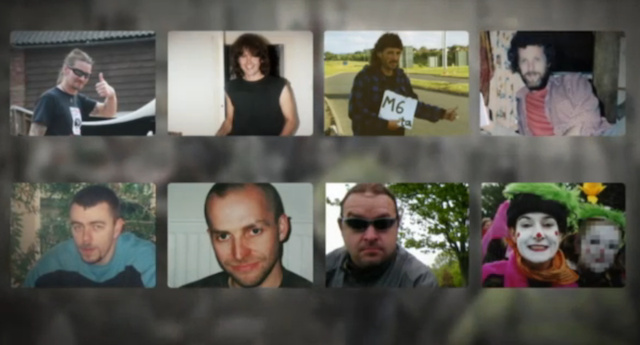
British police officers undercover in protest movements have been shown to have regularly operated outside the UK. Activists, lawyers and MPs have all called for an independent public inquiry in order to reveal the full extent of the practice.

Two-and-a-half years after the unmasking of Mark Kennedy and other police spies in protest movements, new information has emerged that reveals the extent to which police forces across Europe colluded in their deployment. Accusations have been made that police infiltrators were at the forefront of planning protests, acting as agent provocateurs. European law enforcement agencies coordinated these activities in secretive, unaccountable transnational working groups. Police officers formed long-term, intimate relationships with activists, had children with them, and became part of their extended families. The identities of dead children were stolen to create cover “legends.”

Rather than provide answers, this information has given rise to more questions:

• On what grounds was infiltration authorised?

• Did national police forces have knowledge of foreign undercover officers operating on their territory and, if so, did they benefit from information obtained by those officers?

• Is forming relationships with “targets” – including having children with them – official state policy?

• To what extent are undercover deployments demonstrative of coordinated European police operations?

• How many – if any – of the groups infiltrated by undercover agents can be said to warrant such levels of intrusion, and how is this assessed?

Legal challenges and political inquiries have been made – and are ongoing – in an attempt to find answers to some of these questions. Official reviews have been carried out in a number of countries, but those that have been made public – for example in Iceland and the UK – have been condemned as lacklustre and shallow by political activists, journalists and elected representatives. [1] The majority of these reviews have been kept secret, providing no answers to those affected by the actions of undercover officers, while those who authorised and took part in the operations have yet to be called to account. While officials may have occasionally wrung their hands and expressed concern, no heads have rolled – yet. [2]

Repeated calls have been made in the UK for an independent public inquiry into the use of police spies to infiltrate movements, including by a former Director of Public Prosecutions, Ken Macdonald, which have so far been resisted. [3] This article illustrates significant collusion amongst European police forces and arguably only a Europe-wide inquiry, for example by the European Parliament, can go some way towards establishing the extent to which authorities across the continent have undermined civil liberties and human rights. Read More

Sep 12 2013
1 Comment

The Mark Kennedy Saga – Chapter Iceland


Snorri Páll Jónsson Úlfhildarson Grapevine

Each time a free-floating rumour gets confirmed, and past political behaviour becomes a scandalous spectacle, one cannot resist wondering if such conduct might be going on today. This was the case in 2006, after a grand exposure of espionage the Icelandic state aimed at socialists during the Cold War. During parliamentary discussions following the revelation, Mörður Árnason, MP for the Social-Democratic Alliance (“Samfylkingin”), highlighted the importance of revealing if similar espionage was indeed occurring in present times. If so, he asked, “how is it being conducted? […] Which foreign states have been able to access this information?” Quite typically, those questions were never answered.

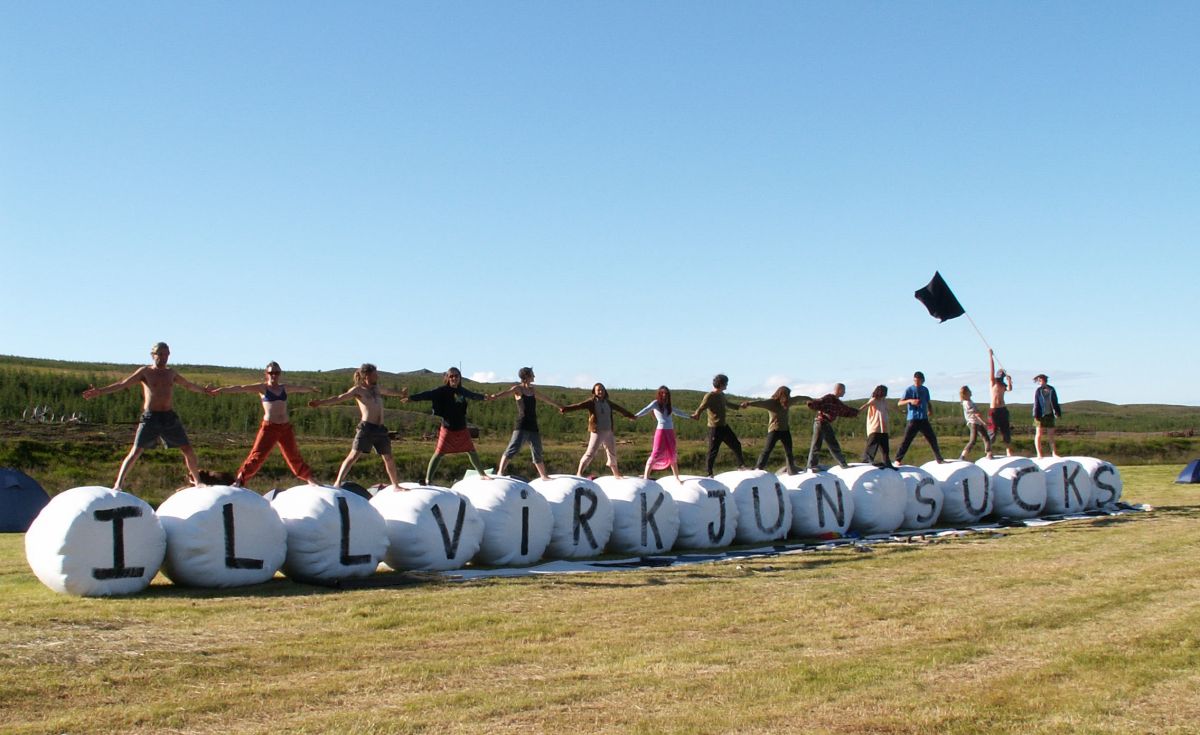
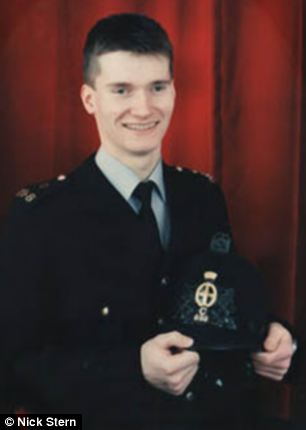
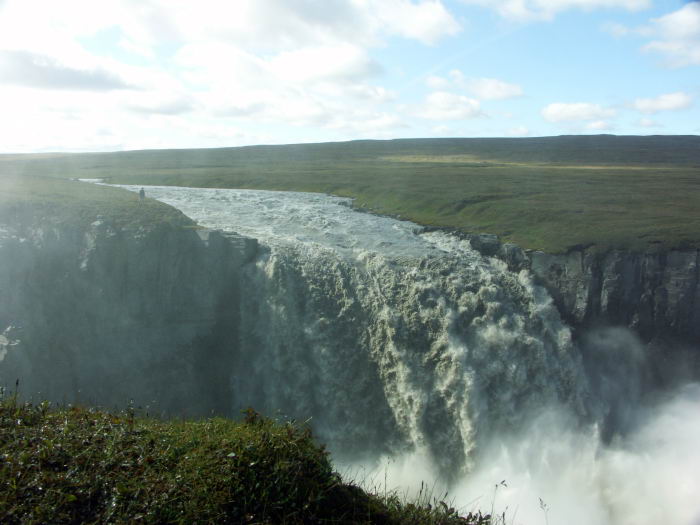
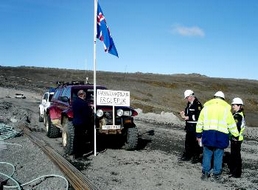
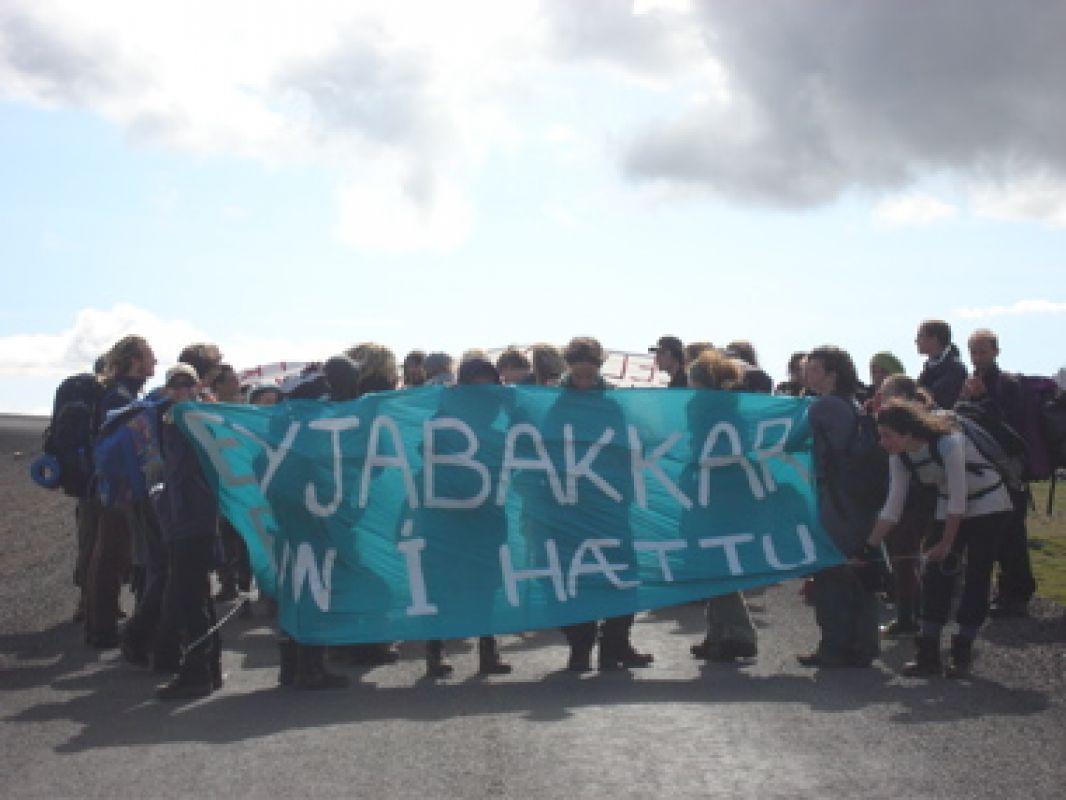
Half a decade later, in late 2010, it was revealed that a British police officer, one Mark Kennedy, had travelled around Europe for seven years disguised as environmental and anti-capitalist activist ‘Mark Stone’ and was collecting information about various activist movements and, in some cases, acting as an agent provocateur. Along with the UK, Denmark, Germany, Italy and France — to name but a few of the places where he worked — he did a stint in Iceland’s Eastern highlands in the summer of 2005. In Iceland, he attended a protest camp organised by the environmentalist movement Saving Iceland which targeted the construction of the gargantuan Kárahnjúkar dam and American aluminium giant Alcoa’s smelter in Reyðarfjörður.

The revelation mostly stayed within activist circles and publications, until early 2011, when a public expose of the spy’s true identity lead to the collapse of a UK trial against six climate-change activists, in which Mark’s secretly obtained evidence played a key role. British newspaper The Guardian then took up the case, and the Mark Kennedy saga started to snowball contemporaneously with the broader attention it received, bringing to light a number of other undercover spies.

Sex, Secrecy And Dead Children’s Identities

Shortly after Mark was exposed, Irish and German authorities admitted that he had worked within their jurisdictions and with their knowledge. Due to the ongoing efforts of Andrej Hunko — MP for German left party Die Linke — a truckload of information regarding European cross-border undercover police operations has since seen the light of day.

A recent book on the matter, written by Guardian journalists Paul Lewis and Rob Evans, brings further context to the affair — the mapping of at least 30 years of police espionage and infiltration of environmentalist, anti-racist and anarchist movements in the UK and elsewhere. Among the information revealed, the authors explain how the undercover officers at the Special Demonstration Squad — the undercover unit responsible for the infiltration — had the modus operandi of taking up identities of dead children in order to build up credible alter-egos based on the short lives of real persons.

It has also been revealed that Kennedy — along with others in his position — enjoyed several intimate relationships with some of his prospects, using sex to build up trust and gather information. One infiltrator, Bob Lambert, even fathered a child with one of these women, only to disappear as soon as his undercover employment became too risky. Eight British women who were victims of this tactic have pressed charges against the spies’ employer, the Metropolitan Police, due to the psychological damage they suffered. In a recent episode of investigative TV programme ‘Dispatches’ on Channel 4, some of them described their experience as having been mass-raped by the state, as they would never have consented to sleeping with the police officers had they been aware of their real identities. Adding insult to injury, their claims will not be heard openly — the British High Court recently ruled that it would take place in the secret Investigatory Powers Tribunal.

Saving Hell’s Angels

Enter Iceland, where the big question concerned whether Mark Kennedy had operated with or without the Icelandic authorities’ knowledge and approval. According to the country’s penal code, a foreign party or state’s espionage that takes place within the jurisdiction of the Icelandic state — or is directed at something or someone therein — is illegal and punishable with five-years imprisonment. Had Mark operated without the authorities’ knowledge, it should have caused an international conflict. If he, on the other hand, collaborated with the Icelandic police, it would have equaled the invoking of proactive investigative powers, which the Icelandic police apparently didn’t have at that time.*

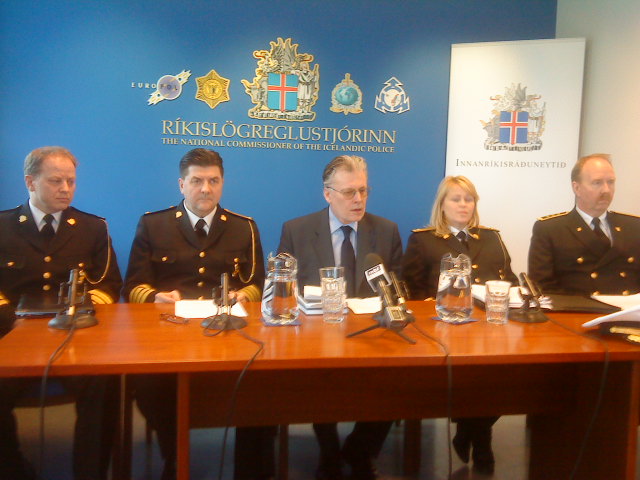
Thus the affair entered Iceland’s parliament in late January 2011. Assuming the former version being more likely than the latter, the above-mentioned MP Mörður Árnason asked his fellow party-member and then-Minister for Foreign Affairs, Össur Skarphéðinsson, about the government’s possible actions regarding the matter. After a few lousy personal jokes thrown between the two, Össur claimed he would wait for a report on the matter — conducted by the National Commissioner of the Icelandic Police — which Ögmundur Jónasson, MP for the Left Greens and then Minister of the Interior, had already requested.

But when finally published by the Commissioner’s National Security Unit in May 2011, it was pretty much impossible to estimate the relevance of the report, as the details of Ögmundur’s request were never made public. It was, however, clear that the National Commissioner — whose report literally equated environmentalist activists with Hells Angels — wasn’t about to bring any concrete information out into the public domain.

Lost In Information

Although admitting that the police received information about the activists and their plans via domestic and foreign sources, and that the Icelandic police collaborated with foreign police authorities regarding the protests, the report’s authors nevertheless fully dodged the question regarding the Icelandic police’s alleged collaboration with Mark Kennedy. The main conclusion of the report merely found that “during an overhaul of data at the National Commissioner’s office, no information has come forth enabling an answer regarding whether this agent provocateur […] was here in collaboration with or without the knowledge of the Icelandic police in 2005.”

Despite criticism from Saving Iceland and Árni Finnsson, head of the Iceland Nature Conservation Association, which both accused the minister of condoning cover-ups and evasions by accepting these results, Ögmundur never really touched officially on the issue again. Neither did Össur nor Mörður or — as a matter of fact — anyone else from the establishment.

The truth regarding Kennedy’s operations in Iceland is still not publicly acknowledged, and the absurdity of the issue as it now stands is probably best described by Ögmundur’s own words, taken from an article published on Smugan — a now defunct leftist news-site —  and his last public remark on the report: “The National Commissioner’s report states that the Icelandic police obtained information from abroad concerning the protests at Kárahnjúkar, but that the police do not have information about how this information was obtained.”

* It is, in fact, questionable if the Iceland police had proactive investigative powers or not. As a result of weak laws and a lack of regulations, it actually seems that until 2011 the police had just about carte blanche regarding whom to spy on and for what reason. See more about it here.

Click here to go to the support site for the women’s legal action against the Metropolitan Police.

Watch the above-mentioned Dispatches show here below:

The Police’s Dirty Secret (47mins – Dispatches/Channel4 – 24JUN2013) from Casey Oliver on Vimeo.

May 24 2013

In the Land of the Wild Boys


Andri Snær Magnason

First published in Grapevine. Based on a 2010 article entitled “Í landi hinna klikkuðu karlmanna.” (“In the Land of the Mad Men”). Translated in part by Haukur S. Magnússon.

After the election, we see the old parties of economic mass destruction are coming back to power. Giving enormous promises of easy money to be wrestled from evil vulture funds, debt relief and tax reduction, The Progressive Party doubled in size after a few years of hardship. There is a jolly good feeling between the two young new leaders of a brave new Iceland, and when a radio host called them up and offered to play them a request, they asked for Duran Duran’s ‘Wild Boys.’ I Googled the lyrics, not quite remembering the lines, and got a nice chill down my back:

Wild boys fallen far from glory
Reckless and so hungered
On the razors edge you trail
Because there’s murder by the roadside
In a sore afraid new world

They tried to break us,
Looks like they’ll try again

Sounds quite grim. This, coupled with the new government’s announcement that it would be effectively dismantling the Ministry for the Environment and Natural Resources and that there will be no Minister for the Environment, gave me a strange flashback feeling. I decided to revisit the state of mind that we used to call normal in 2006. When the economic policy, the energy policy, the expansion of our towns, the mortgages on our homes—almost all aspects of our daily life had become totally mad. This is not my own diagnosis; if you search the homepage of the IMF for the phrase “Collective Madness,” you’ll find this:

“’Iceland, in the decade and a half leading up to the crisis, was an example of collective madness,’ said Willem Buiter, chief economist at Citigroup, a remark that elicited spontaneous applause from the more than 300 participants, many of them Icelandic policymakers, academics, and members of the public.”

In our daily lives, we usually sense what is normal and what is over the top. Sometimes the discourse will blind us; PR and propaganda can create a kind of newspeak. It can be a good exercise to try to talk about things in a foreign language, to view them in a new light. As an Icelander, you could for instance try to tell someone from another country that Iceland’s government sold one state bank and received payment in the form of a loan from another state bank—and vice versa. That the state banks were thereby handed to men that were closely connected to the then-reigning political parties. The manager of one of the parties became head of one of the banks’ board of directors, while the other party’s former Minister of Trade belonged to the group that was given the other bank. That man had access to every bit of inside information about the bank’s standing.

In the meantime, this former Minister of Trade became Central Bank Manager. He went to the US and made Alcoa an offer that the company could not refuse. He had thus set in motion the largest-scale construction project in Icelandic history, greatly increasing economic activity in Iceland—a grand boon for the bank he just finished selling to himself.

If you tell this story in a foreign language, people shake their heads. They gape in disbelief. They use words like “corruption” and “mafia.” They exclaim, full of disbelief and even disappointment, “no, not in Scandinavia!”

THE ACCEPTED INSANITY

It is insane to expand a banking system by tenfold in eight years. We know that now. It isn’t technically possible to grow all the knowledge and experience needed to build up and manage such a contraption in such a short time. Not even by shoving an entire generation through business school. It is impossible.

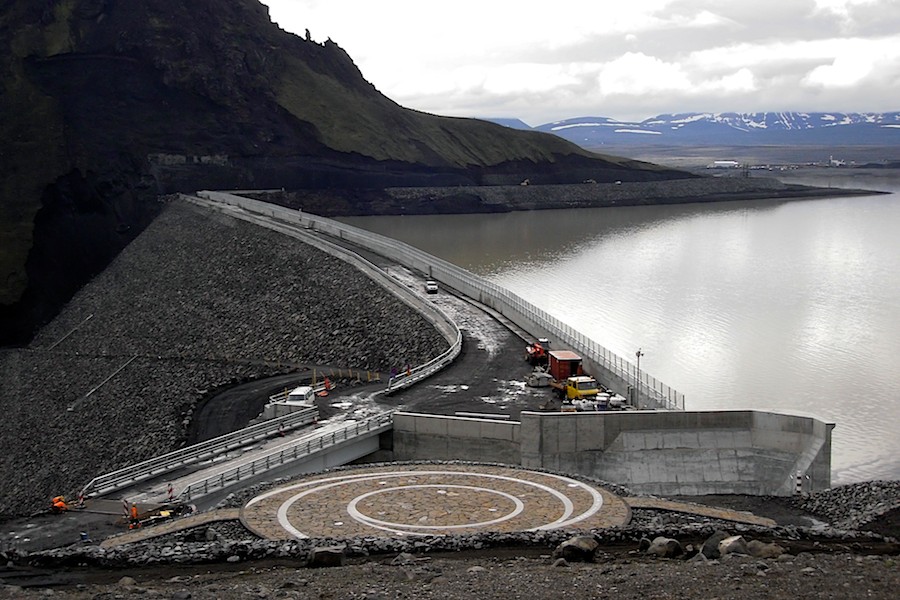
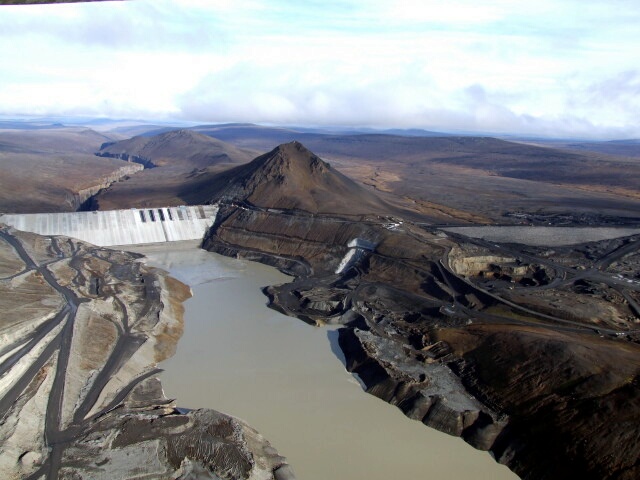
But the megalomania was not just confined to the banking sector. Energy production in Iceland was doubled from 2002–2007, when the huge Kárahnjúkar dam was built in the eastern part of the highlands—to serve one single Alcoa smelting plant. The energy it produces, about 650MW annually, is enough to power a city of one million people. Doubling the energy production in a developed country over a five-year period is not only unheard of, but it would also be considered ridiculous in all of our neighbouring nations. Most industrialised states increase their energy production by around 2–3% annually. Doubling it would be unthinkable. It has been proven again and again that gargantuan investments generally destroy more than they create. Read More

May 24 2013
2 Comments

Preserving the Laxá Explosion — Blowing up Dams and Democracy Restrictions


Article by Snorri Páll Jónsson Úlfhildarson, originally published in The Reykjavík Grapevine. Photos: Stills from the film.

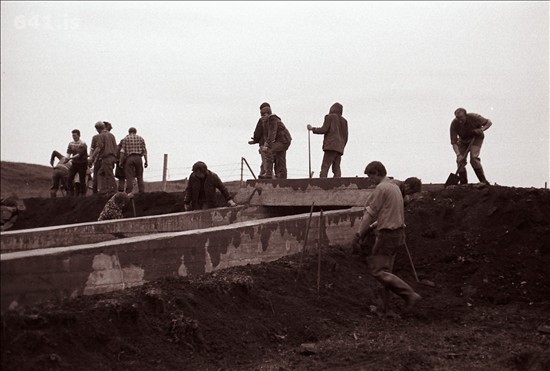
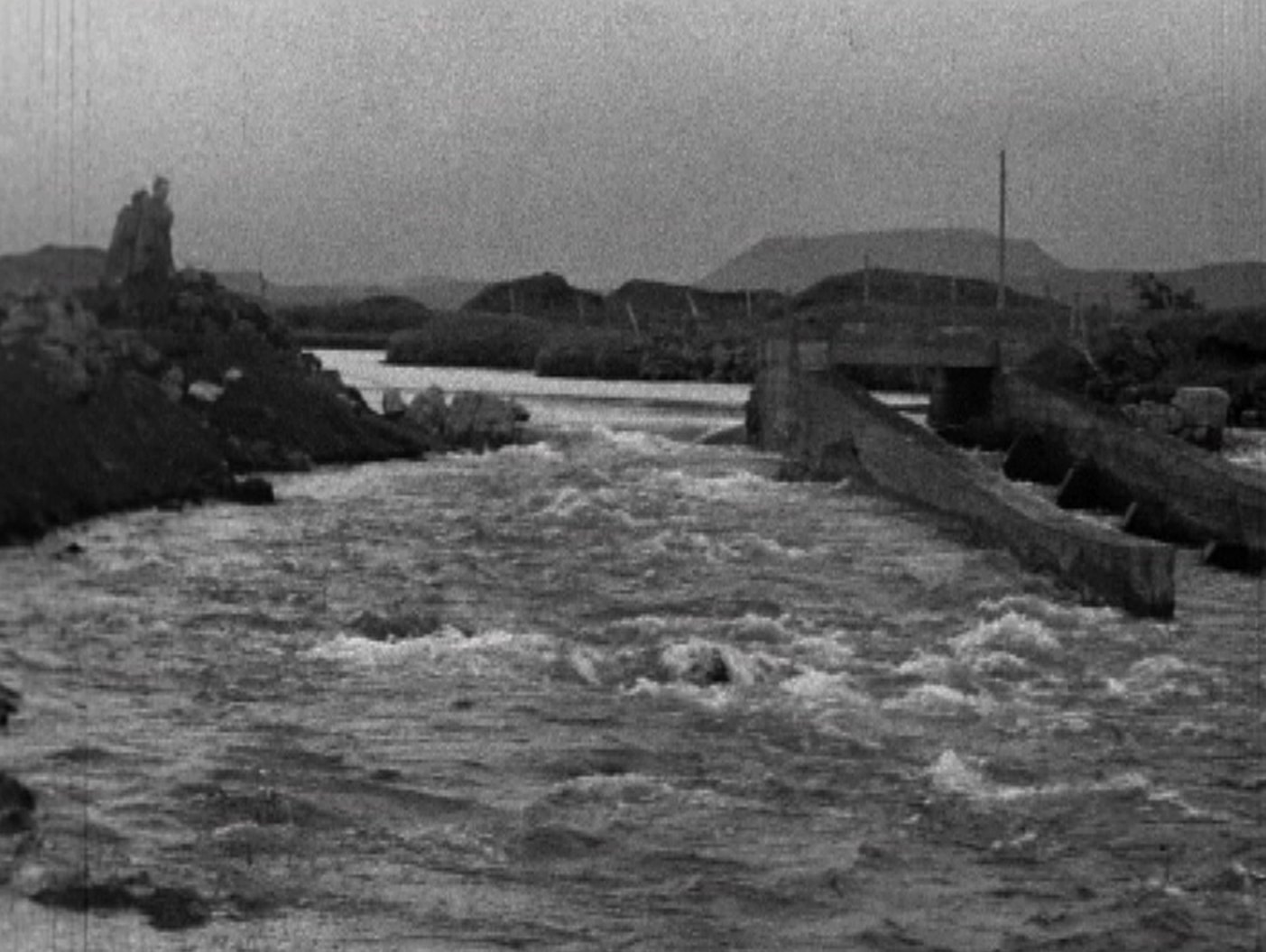
It’s dark and silent — nothing unusual around midnight by river Laxá and lake Mývatn in the north of Iceland. But somewhere behind the darkness, beneath the silence, something extraordinary is about to happen. Suddenly, a dynamite explosion disturbs the silence — in what has gone down in history as a single yet highly important step in a much greater movement of resistance.

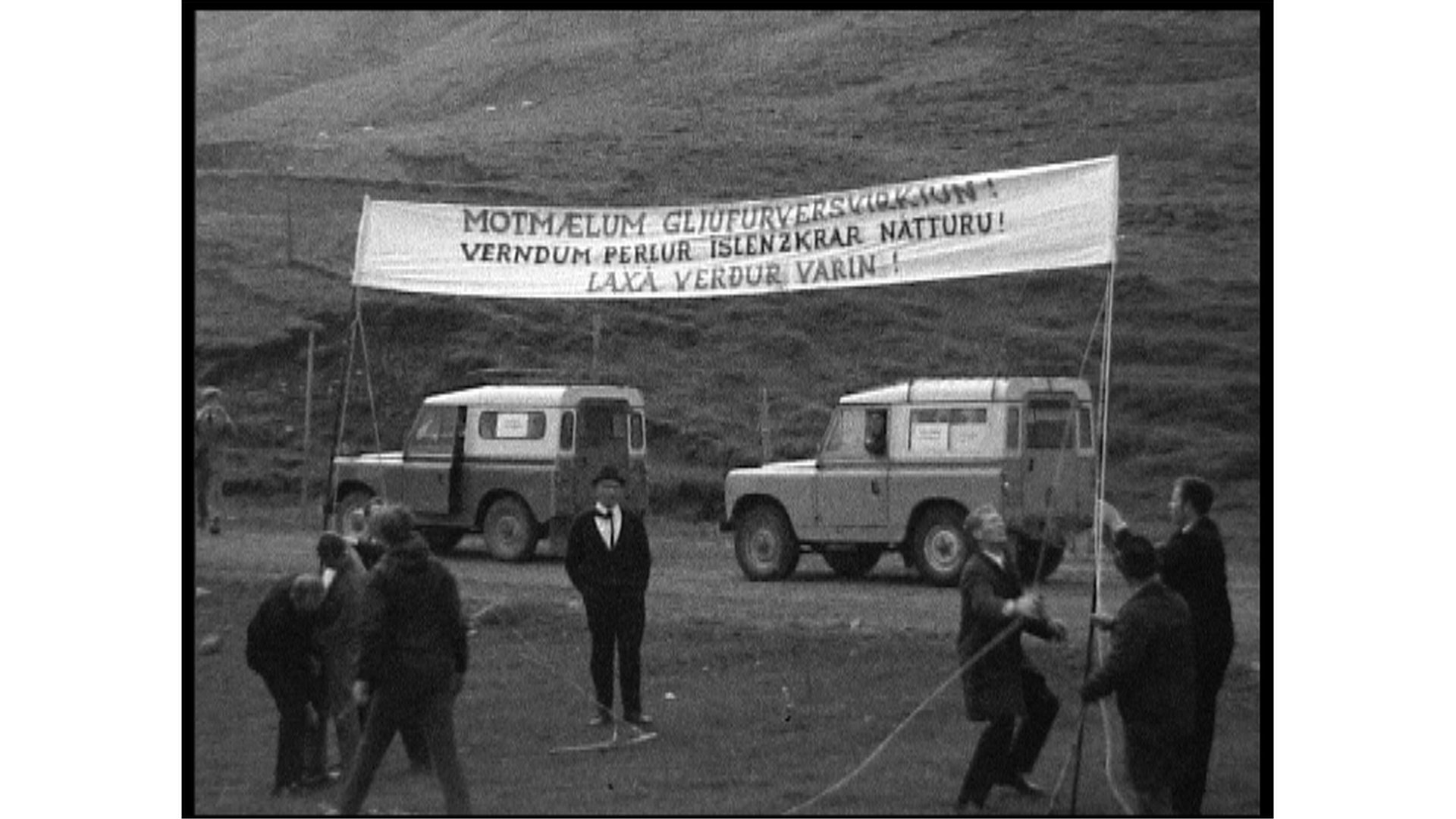
More than a hundred farmers officially claimed responsibility for the explosion, which annihilated a small dam in the river on August 25, 1970. The area’s inhabitants were determined to prevent the construction of a much bigger dam, which would have destroyed vast quantities of this natural area, as well as most of the surrounding farmlands.

Just as determined to keep the saboteurs away from legal troubles, those who claimed responsibility kept a strict policy of silence, making it hard for the authorities to single out alleged leaders or protagonists. Now, almost half a century and a saved river later, another bang has broken that silence.

A WATERSHED ACT IN ICELANDIC HISTORY

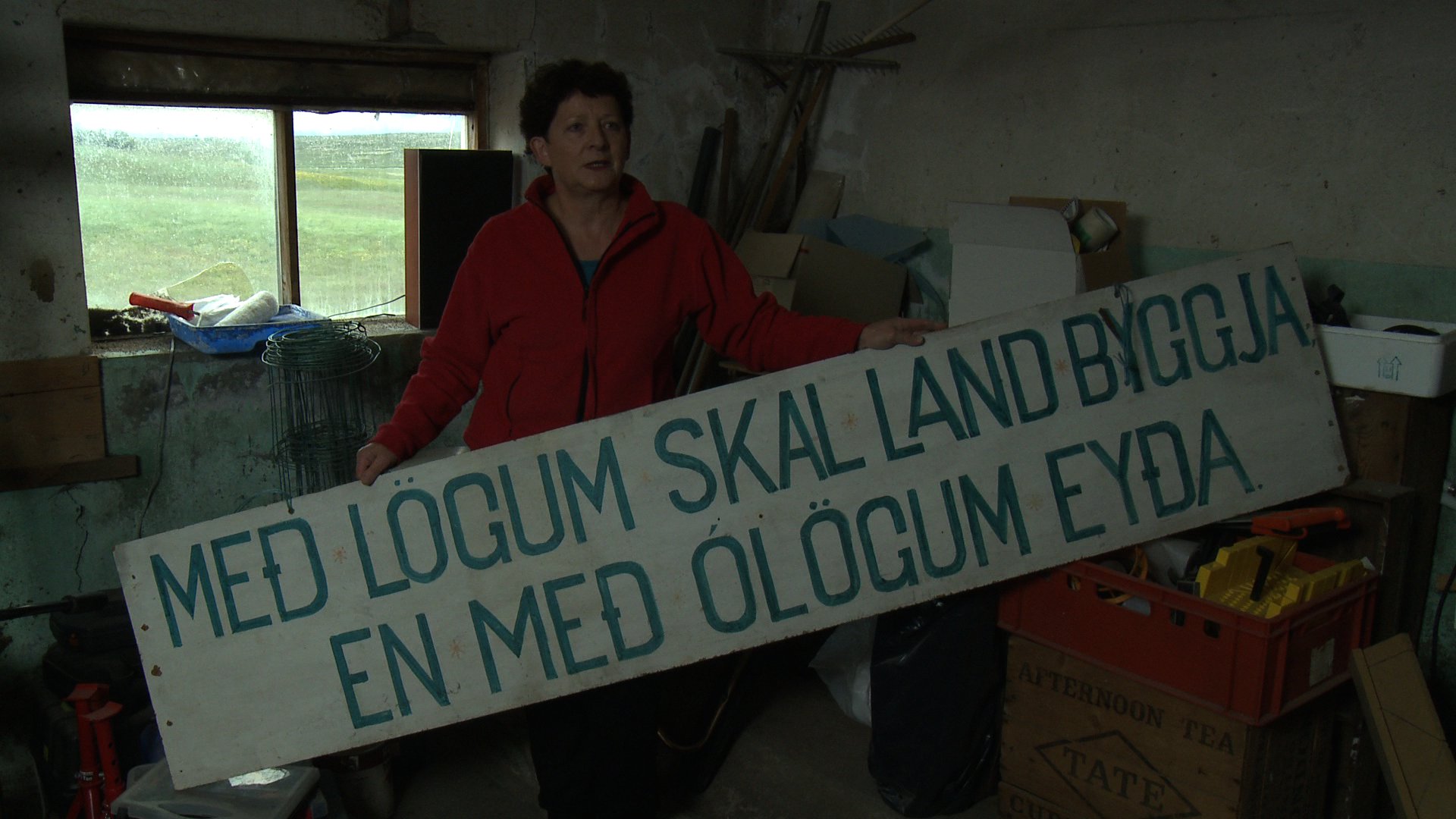
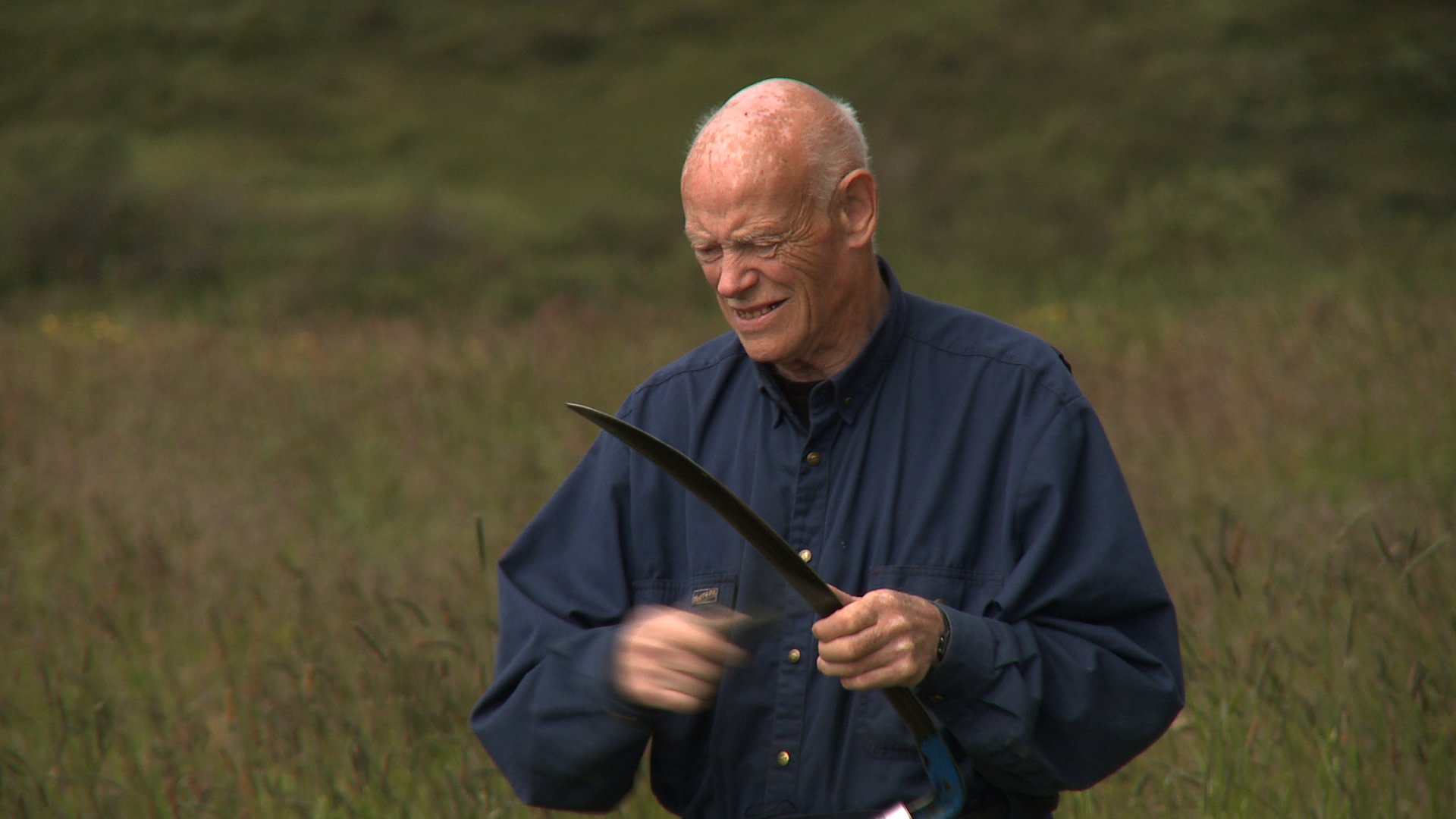
Namely, that is Grímur Hákonarson’s documentary ‘Hvellur’ (“Bang” — see trailer below), which premièred at the Bíó Paradís cinema on January 24. Through dialogues with some of the participants, many of whom still reside by the river, the film tells the story of the Laxá conflict. “We kept all commentators and university professors out,” Grímur told me a few days before the première, “focusing instead entirely on those who took part in it.”

The case is often considered the beginning of environmentalism in Iceland. Shortly thereafter, Nobel Prize-winning author Halldór Laxness wrote his famous, hard-headed call-out for nature conservation — titled ‘The Warfare Against the Land’ — and the Laxá conflict also brought about the Environmental Impact Assessment, which up until then had been completely absent in Iceland’s energy production.

“What makes the Laxá conflict peculiar is that those who resisted also succeeded,” Grímur says. “The planned dam was never built and the area was saved.” Four years later, parliament passed a law securing the protection of Laxá and Mývatn, contributing to the explosion’s status as “the most remarkable and powerful event in the history of environmentalism in Iceland,” as Sigurður Gizurarson, the bomber’s defence lawyer, put it.

Celebrating the forty-year anniversary of the act in August 2010, one of Iceland’s most remarkable environmentalists, Guðmundur Páll Ólafsson, remarked that the act “literally saved the ecosystem of Mývatn and Laxá.” He also maintained that the dynamite “blew up a democracy-restriction imposed on the district’s inhabitants and all those who loved the land, by the authorities and the board of Laxárvirkjun,” the company that owned the dam. “The arrogance of the authorities hovered over the land until the bomb exploded, but then we became free — for a while.”

Sixty-five people were charged for sabotage, but no one spoke out about any details and the Supreme Court ended up handing out mild suspended sentences. The film now reveals that three men were responsible for igniting the dynamite. Only one of them is still alive.

STILL THE BONE OF CONTENTION

In any case, exposing secrets is much less the film’s aim than documenting and preserving this extraordinary story. And for a good reason — it could easily fall into oblivion. “People over fifty remember this event very well, but those who are younger don’t really know the story,” Grímur says, adding that during the film’s making, they were told numerous times that they should have started filming much earlier as many involved have since passed away.

But how do those still alive recall these events today? “No one looks back regretfully, and most of them are still politically radical, opposed to large-scale destruction of natural areas for energy production. They are proud of the results of their act,” Grímur says.

But as Guðmundur Páll’s words, “then we became free — for a while,” imply, the plans had not been cancelled for good. During the construction of the huge Kárahnjúkar dams in Iceland’s eastern highlands, a new construction plan for Laxá was put on the drawing table. However, as words of warning came from Mývatn — including that the locals surely hadn’t forgotten how to use dynamite — the plans were later drawn back. Siv Friðleifsdóttir, then Minister of the Environment, stated that never before had she been so pleased to cancel a project.

Many of Iceland’s most remarkable natural areas are still the bone of contention between environmentalists and industrialists, including geothermal areas close to Mývatn [see here and here]. Grímur doesn’t consider the film to be part of the current conflict, but it doesn’t mean that people won’t feel some connection with today’s most pressing environmental issues. “One only needs to listen to the debates in parliament,” Grímur concludes, “to notice that the same old discussion is still going on today.”
___________________________________________________________________

HVELLUR from Ground Control Productions on Vimeo.

Apr 25 2013
4 Comments

The Biological Death of River Lagarfljót — Yet Another Revelation of the Kárahnjúkar Disaster


In his much celebrated play, Accidental Death of an Anarchist, Italian absurdist Dario Fo brings forth a tragicomic picture of the scandal and its most typical aftermaths in democratic societies, thus described by the main protagonist, the Maniac:

People can let off steam, get angry, shudder at the thought of it… ‘Who do these politicians think they are?’ ‘Scumbag generals!’ […] And they get more and more angry, and then, burp! A little liberatory burp to relieve their social indigestion.

These words came to mind last month when Iceland’s media reported upon the current situation of river Lagarfljót in the east of Iceland. “Lagarfljót is dead,” some of them even stated, citing the words of author and environmentalist Andri Snær Magnason regarding a revelation of the fact that the river’s ecosystem has literally been killed by the the gigantic Kárahnjúkar Dams. The dams were built in Iceland’s eastern highlands in the years between 2002 and 2006, solely to provide electricity for aluminium giant and arms producer Alcoa’s smelter in the eastern municipality of Reyðarfjörður.

The revelation of Lagarfljót’s current situation originates in a report made by Landsvirkjun, Iceland’s state owned energy company and owner of the 690 MW Kárahnjúkar power plant, the main conclusions of which were made public last month. Although covered as breaking news and somewhat of a scandal, this particular revelation can hardly be considered as surprising news.

Quite the contrary, environmentalists and scientists have repeatedly pointed out the mega-project’s devastating irreversible environmental impacts — in addition to the social and economical ones of course — and have, in fact, done so ever since the plan was brought onto the drawing tables to begin with. Such warnings, however, were systematically silenced by Iceland’s authorities and dismissed as “political rather than scientific”, propaganda against progress and opposition to “green energy” — only to be proven right time and time again during the last half a decade.

AQUATIC ECOSYSTEMS SHOULD RECEIVE MORE ATTENTION

One of the Kárahnjúkar plant’s functions depends on diverting glacial river Jökulsá á Dal into another glacial river Jökulsá í Fljótsdal, the latter of which feeds Lagarfljót. This means that huge amounts of glacial turbidity are funnelled into the river, quantitatively heretofore unknown in Lagarfljót. This has, in return, led to the disintegration of Lagarfljót’s ecosystem, gargantuan land erosion on the banks of the river, serious decrease in fish population and parallel negative impacts on the area’s bird life.

As reported by Saving Iceland in late 2011, when the dams impacts on Lagarfljót had become a subject matter of Iceland’s media, the glacial turbidity has severely altered Lagarfljót’s colour. Therefore, sunlight doesn’t reach deep enough into the water, bringing about a decrease of photosynthesis — the fundamental basis for organic production — and thereby a systematic reduction of nourishment for the fish population. Recent research conducted by Iceland’s Institute of Freshwater Fisheries show that in the area around Egilsstaðir, a municipality located on the banks of Lagarfljót, the river’s visibility is currently less than 20cm deep compared to 60cm before the dams were constructed. As a result of this, not only is there less fish in the river — the size of the fish has also seen a serious decrease.

Following last month’s revelation, ichthyologist Guðni Guðbergsson at the Institute of Freshwater Fisheries, highlighted in an interview with RÚV (Iceland’s National Broadcasting Service) that the destruction of Lagarfljót’s ecosystem had certainly been foreseen and repeatedly pointed out. He also maintained that aquatic environment tends to be kept out of the discourse on hydro dams. “People see what is aboveground, they see vegetation, soil erosion and drift,” he stated, “but when it comes to aquatic ecosystems, people don’t seem to see it very clearly. This biosphere should receive more attention.”

BENDING ALL THE RULES

All of the above-mentioned had been warned of before the dams construction took place, most importantly in a 2001 ruling by Skipulagsstofnun (Iceland’s National Planning Agency) which, after reviewing the Kárahnjúkar plant’s Environmental Impact Assessment, concluded that “the development would result in great hydrological changes, which would have an effect, for example, on the groundwater level in low-lying areas adjacent to Jökulsá í Fljótsdal and Lagarfljót, which in turn would have an impact on vegetation, bird-life and agriculture.” The impacts on Lagarfljót being only one of the dams numerous all-too-obvious negative impacts, Skipulagsstofnun opposed the project as a whole “on grounds of its considerable impact on the environment and the unsatisfactory information presented regarding individual parts of the project and its consequences for the environment.”

However, Iceland’s then Minister of the Environment, Siv Friðleifsdóttir, notoriously overturned the agency’s ruling and permitted the construction. Although her act of overturning her own agency’s ruling is certainly a unique one, it was nevertheless fully harmonious with the mega-project’s overall modus operandi: For instance, during Alcoa and the Icelandic government’s signature ceremony in 2003, Friðrik Sophusson, then director of Landsvirkjun, and Valgerður Sverrisdóttir, then Minister of Industry, boasted of “bending all the rules, just for this project” while speaking to the US ambassador in Iceland.

A BIOLOGICAL WONDER TURNED INTO DESERT

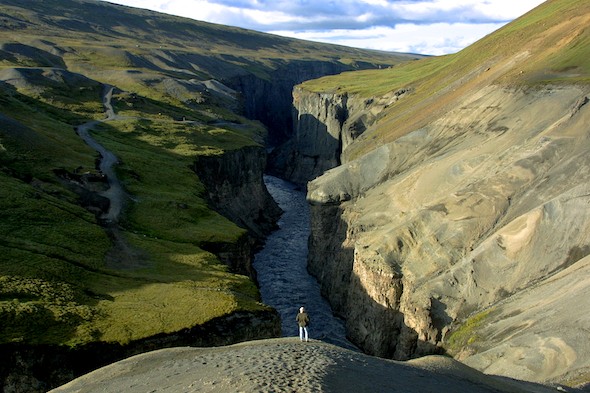
As already mentioned, the destruction of Lagarfljót is only one of the dams irreversible impacts on the whole North-East part of Iceland, the most densely vegetated area north of Vatnajökull — the world’s largest non-arctic glacier — and one of the few regions in Iceland where soil and vegetation were more or less intact. Altogether, the project affects 3,000 square km of land, no less than 3% of Iceland’s total landmass, extending from the edge of Vatnajökull to the estuary of the Héraðsflói glacial river.

Sixty major waterfalls were destroyed and innumerable unique geological formations drowned, not to forget Kringilsárrani — the calving ground of a third of Iceland’s reindeer population — which was partly drowned and devastated in full by the project. In 1975, Kringilsárrani had been officially declared as protected but in order to enable the Kárahnjúkar dams and the 57 km2 Hálslón reservoir, Siv Fiðleifsdóttir decided to reduce the reserve by one fourth in 2003. When criticized for this infamous act, Siv stated that “although some place is declared protected, it doesn’t mean that it will be protected forever.”

The dams have also blocked silt emissions of the two aforementioned glacial rivers, Jökulsá á Dal and Jökulsá í Fljótsdal, resulting in the receding of the combined delta of the two rivers — destroying a unique nature habitat in the delta. In their 2003 article, published in World Birdwatch, ornithologists Einar Þorleifsson and Jóhann Óli Hilmarsson outlined another problem of great importance:

All glacier rivers are heavy with sediments, and the two rivers are muddy brown in summer and carry huge amounts of sediment, both glacial mud and sand. The Jökulsá á Dal river is exceptional in the way that it carries on average 13 times more sediment than any other Icelandic river, 10 million metric tons per year and during glacial surges the amount is many times more. When the river has been dammed this sediment will mostly settle in the reservoir.

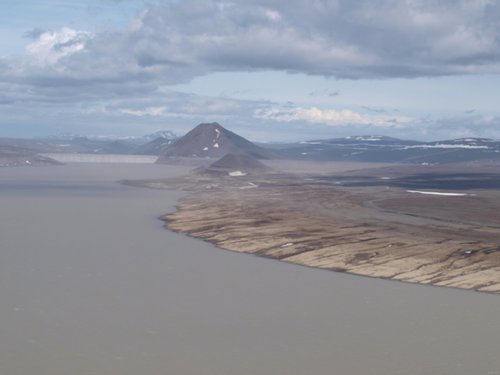
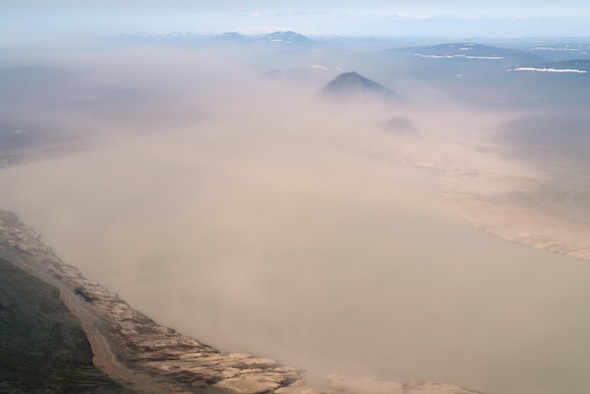
In contravention of the claim that Kárahnjúkar’s hydro electricity is a “green and renewable energy source,” it is estimated that the reservoir will silt up in between forty and eighty years, turning this once most biologically diverse regions of the Icelandic highlands into a desert. While this destruction is slowly but systematically taking place, the dry dusty silt banks caused by the reservoir’s fluctuating water levels are already causing dust storms affecting the vegetation of over 3000 sq km, as explained in Einar and Jóhann’s article:

The reservoir will be filled with water in autumn but in spring 2/3 of the lake bottom are dry and the prevailing warm mountain wind will blow from the south-west, taking the light dry glacial sediment mud in the air and causing considerable problems for the vegetation in the highlands and for the people in the farmlands located in the valleys. To add to the problem the 120 km of mostly dry riverbed of Jökulsá á Dal will only have water in the autumn, leaving the mud to be blown by the wind in spring.

This development is already so severe that residents of the Eastfjords municipality Stöðvafjörður, with whom Saving Iceland recently spoke, stated that the wind-blown dust has been of such a great deal during the summers that they have often been unable to see the sky clearly.

All of the above-mentioned is only a part of the Kárahnjúkar dams over-all impacts, about which one can read thoroughly here. Among other factors that should not be forgotten in terms of hydro power would be the dams’ often underestimated contribution to global warming — for instance via reservoirs’ production of CO2 and methane (see here and here) — as well as glacial rivers’ important role in reducing pollution on earth by binding gases that cause global warming, and how mega-dams inhibit this function by hindering the rivers’ carrying of sediments out to sea.

TEXTBOOK EXAMPLE OF CORRUPTION AND ABUSE OF POWER

“Lagarfljót wasn’t destroyed by accident,” Andri Snær Magnason also said after the recent revelation, but rather “consciously destroyed by corrupt politicians who didn’t respect society’s rules, disregarded professional processes, and couldn’t tolerate informed discussion.” The same can, of course, be said about the Kárahnjúkar ecological, social and economical disaster as a whole, the process of which was one huge textbook example of corruption and abuse of power.

Responding to same news, Svandís Svavarsdóttir, Iceland’s current Minister of the Environment, cited a recent report by the European Environment Agency, titled “Late Lessons from Early Warnings,” in which the results of a major research project into mega-project’s environmental impacts and public discussion are published. One of the damning results, the report states, is that in 84 out of 88 instances included in the research, early warnings of negative impacts on the environment and public health proved to be correct.

This was certainly the case in Iceland where environmentalists and scientists who warned of all those foreseeable impacts, both before and during the construction, found themselves silenced and dismissed by the authorities who systematically attempted to suppress any opposition and keep their plans unaltered.

One of the most notorious examples of this took place after the publication of Susan DeMuth’s highly informative article, “Power Driven,” printed in The Guardian in 2003, in which she highlighted all the up-front disastrous impacts of the project. The reaction in Iceland was mixed: While the article served as a great gift to Icelandic environmentalists’ struggle — tour guide Lára Hanna Einarsdóttir suggesting “that an Icelandic journalist would have lost their job if he or she had been so outspoken” — the reaction of the project’s prime movers was one of fury and hysteria. Mike Baltzell, president of Alcoa Primary Development and one of the company’s main negotiators in Iceland, wrote to The Guardian accusing DeMuth of “creating a number of misconceptions” regarding the company’s forthcoming smelter. Iceland’s Ambassador in the UK and Landsvirkjun’s Sophusson took a step further, contacting the British newspaper in a complaint about the article’s content and offering the editor to send another journalist to Iceland in order to get “the real story” — an offer to which the paper never even bothered to reply.

Another example is that of Grímur Björnsson, geophysicist working at Reykjavík Energy at that time, who was forbidden from revealing his findings, which were suppressed and kept from parliament because they showed the Kárahnjúkar dams to be unsafe. His 2002 report, highly critical of the dams, was stamped as confidential by his superior at the time. Valgerður Sverrisdóttir, then Minister of Industry, subsequently failed to reveal the details of the report to parliament before parliamentarians voted on the dams, as she was legally obliged to do. Adding insult to injury, Grímur was finally deprived of his freedom of expression when his superior at Reykjavík Energy — taking sides with Landsvirkjun — prohibited him to speak officially about the Kárahnjúkar dams without permission from the latter company’s director at that time, Friðrik Sophusson.

THE SHADOW OF POLLUTED MINDS

Similar methods applied to the East-fjords and other communities close to the dams and the smelter, where the project’s opponents were systematically ridiculed, terrorized and threatened. One of them is Þórhallur Þorsteinsson who, in a thorough interview with newspaper DV last spring, described how he and other environmentalists from the East were persecuted for their opposition to the dams. In an attempt to get him fired from his job, politicians from the region even called his supervisor at the State Electric Power Works, for which he worked at the time, complaining about his active and vocal opposition. Another environmentalist, elementary school teacher Karen Egilsdóttir, had to put up with parents calling her school’s headmaster, demanding that their kids would be exempt from attending her classes.

Farmer Guðmundur Beck — described by DeMuth as “the lone voice of resistance in Reyðarfjörður” — was also harassed because of his outspoken opposition towards the dams and the smelter. After spending his first 57 years on his family’s farm where he raised chicken and sheep, he was forced to close down the farm after he was banned from grazing his sheep and 18 electricity pylons were built across his land. Moreover, he was literally ostracised from Reyðarfjörður where Alcoa’s presence had altered society in a way thus described by Guðundur at Saving Iceland’s 2007 international conference:

In the East-fjords, we used to have self-sustaining communities that have now been destroyed and converted into places attracting gold diggers. Around the smelter, there will now be a community where nobody can live, work or feed themselves without bowing down for “Alcoa Director” Mr. Tómas.* — We live in the shadow of polluted minds.

(*Mr. Tómas” is Tómas Már Sigurðsson, Managing Director of Alcoa Fjarðaál at that time but currently president of Alcoa’s European Region and Global Primary Products Europe. Read Guðmundur’s whole speech in the second issue of Saving Iceland’s Voices of the Wilderness magazine.)

A LESSON TO LEARN?

All of this leads us to the fact that Icelandic energy companies are now planning to go ahead and construct a number of large-scale power plants — most of them located in highly sensitive geothermal areas — despite a seemingly non-stop tsunami of revelations regarding the negative environmental and public health impacts of already operating geothermal plants of such size. This would, as thoroughly outlined by Saving Iceland, lead to the literal ecocide of highly unique geothermal fields in the Reykjanes peninsula as well as in North Iceland.

Two of the latter areas are Þeistareykir and Bjarnarflag, not far from river Laxá and lake Mývatn, where Landsvirkjun wants to build power plants to provide energy to heavy industry projects in the north. Large-scale geothermal exploitation at Hellisheiði, south-west Iceland, has already proven to be disastrous for the environment, creating thousands of earthquakes and a number of polluted effluent water lagoons. The Hellisheiði plant has also spread enormous amounts of sulphide pollution over the nearby town of Hveragerði and the capital area of Reykjavík, leading to an increase in the purchasing of asthma medicine. Another geothermal plant, Nesjavallavirkjun, has had just as grave impacts, leading for instance to the partial biological death of lake Þingvallavatn, into which affluent water from the plant has been pumped.

Responding to criticism, Landsvirkjun has claimed that the Bjarnarflag plant’s effluent water will be pumped down below lake Mývatn’s ground water streams. However, the company has resisted answering critical questions regarding how they plan to avoid all the possible problems — similar to those at Hellisheiði and Nesjavellir — which might occur because of the pumping and thus impact the ecosystem of Mývatn and its neighbouring environment. In view of this, some have suggested that Iceland’s next man made ecological disaster will be manifested in a headline similar to last month’s one — this time stating that “Mývatn is dead!”

Concluding the current Lagarfljót scandal — only one manifestation of the foreseen and systematically warned of Kárahnjúkar scandal — the remaining question must be: Will Icelanders learn a lesson from this textbook example of political corruption and abuse of power?

Recent polls regarding the coming parliament elections on April 27, suggests that the answer is negative as the heavy-industry-friendly Framsóknarflokkur (The Progressive Party), for which both Siv Friðleifsdóttir and Valgerður Sverrisdóttir sat in parliament, seems to be about to get into power again after being all but voted out of parliament in the 2007 elections. Following the Progressives, the right-wing conservative Sjálfstæðisflokkur (The Independence Party) is currently the second biggest party, meaning that a right-wing government, supportive of — and in fact highly interrelated to — the aluminium and energy industries, is likely to come into office in only a few days from now.

In such a case, Iceland will be landed with the very same government that was responsible for the Kárahnjúkar disaster as well as so many other political maleficences, including the financial hazardousness that lead to the 2008 economic collapse and Iceland’s support of the invasion in Iraq — only with new heads standing out of the same old suits. Sadly but truly, this would fit perfectly with the words of Dario Fo’s Maniac when he states on behalf of the establishment:

Let the scandal come, because on the basis of that scandal a more durable power of the state will be founded!

Apr 07 2013
13 Comments

Hand in Hand: Aluminium Smelters and Fluoride Pollution


In October last year, high levels of fluoride were discovered in hay grown on three farms around Alcoa’s Fjarðaál aluminium smelter in East Iceland. In response, the company announced that their much-acclaimed pollution control technology had failed at some point in the summer and claimed that they had “acted immediately” to deal with the situation. In mid January the results of tests on hay which Alcoa itself had submitted to the Food and Veterinarian Authority (MAST) came back, showing that fluoride levels were “below the maximum limit” – 50 mg/kg for cows, goats and sheep, but 30 mg/kg for dairy cattle – and therefore safe for livestock. Two out of seventeen samples were, in fact, above the acceptable fluorine limit for milking cows for human consumption but this was deemed to be fine since that farm only had horses.

The truth is that aluminium smelters and serious fluoride poisoning go hand in hand. Aluminium smelting is the largest single producer of fluorides worldwide. These toxic compounds are released from smelters in both gaseous and solid forms. ‘Scrubbers’ are usually used to remove the majority of fluorides from factory smoke today, but when those scrubbers are spent they are also dumped in landfills where the soluble fluorides absorbed into them can leak out into the soil. Fluorides are phytotoxic (toxic to plants) and actually accumulate in vegetation, making long living trees particularly susceptible to fluoride poisoning. When animals or humans eat fluoride polluted plants or meat, or drink fluoride rich water, they can develop ‘fluorosis’ which weakens bones and teeth and can, in extreme cases, lead to bone deformation and birth defects. Fluoride can also build up in soft tissue in the body causing a range of serious health effects1.

Swollen Jaws and Weak Teeth

In West Iceland, a number of farmers living around the Century Aluminum (Norðurál) smelter in Hvalfjörður have been suffering serious fluoride pollution in their sheep and horses – in particular since a major pollution incident at the factory released large amounts of fluorides in August 2006.

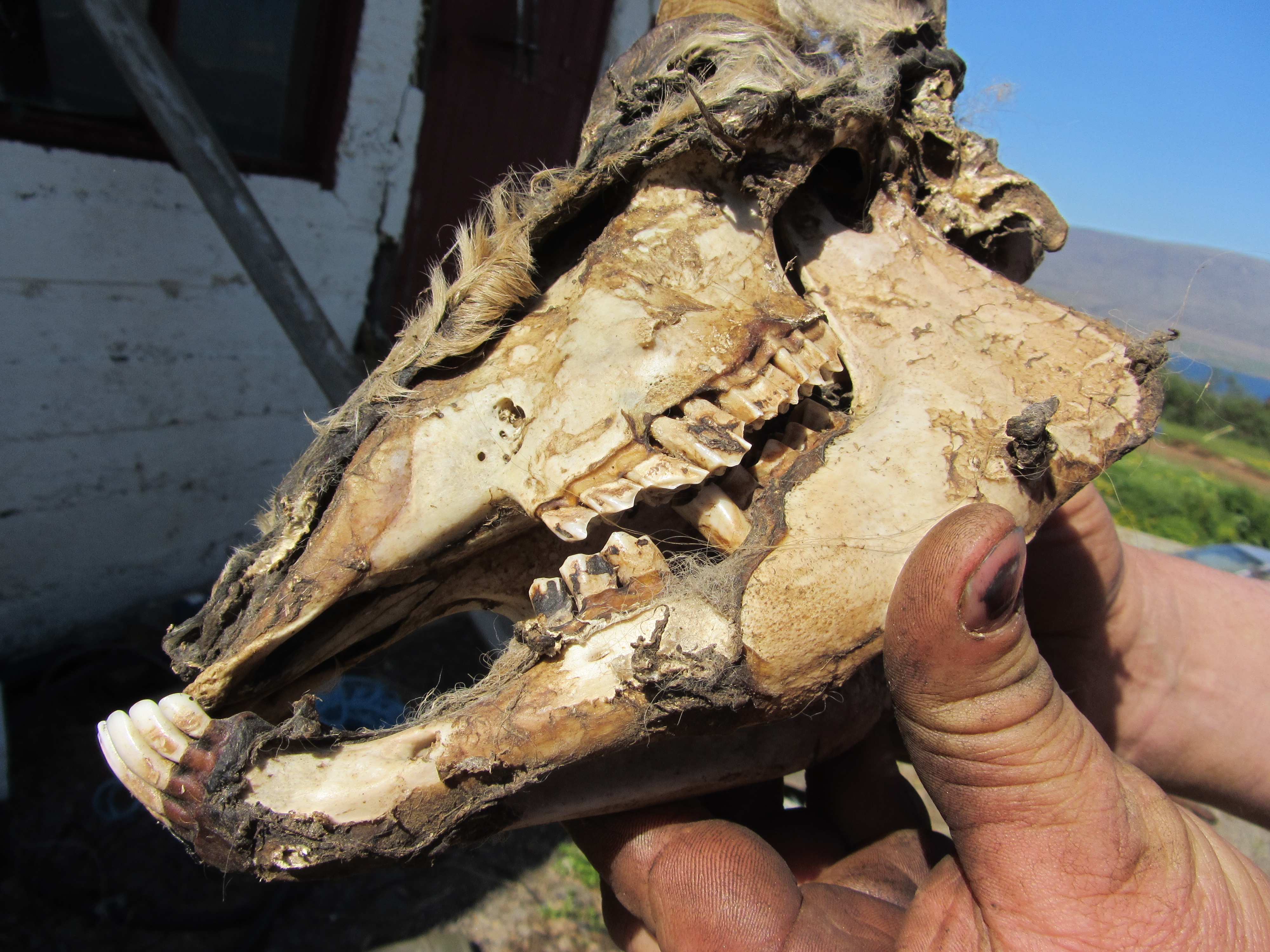
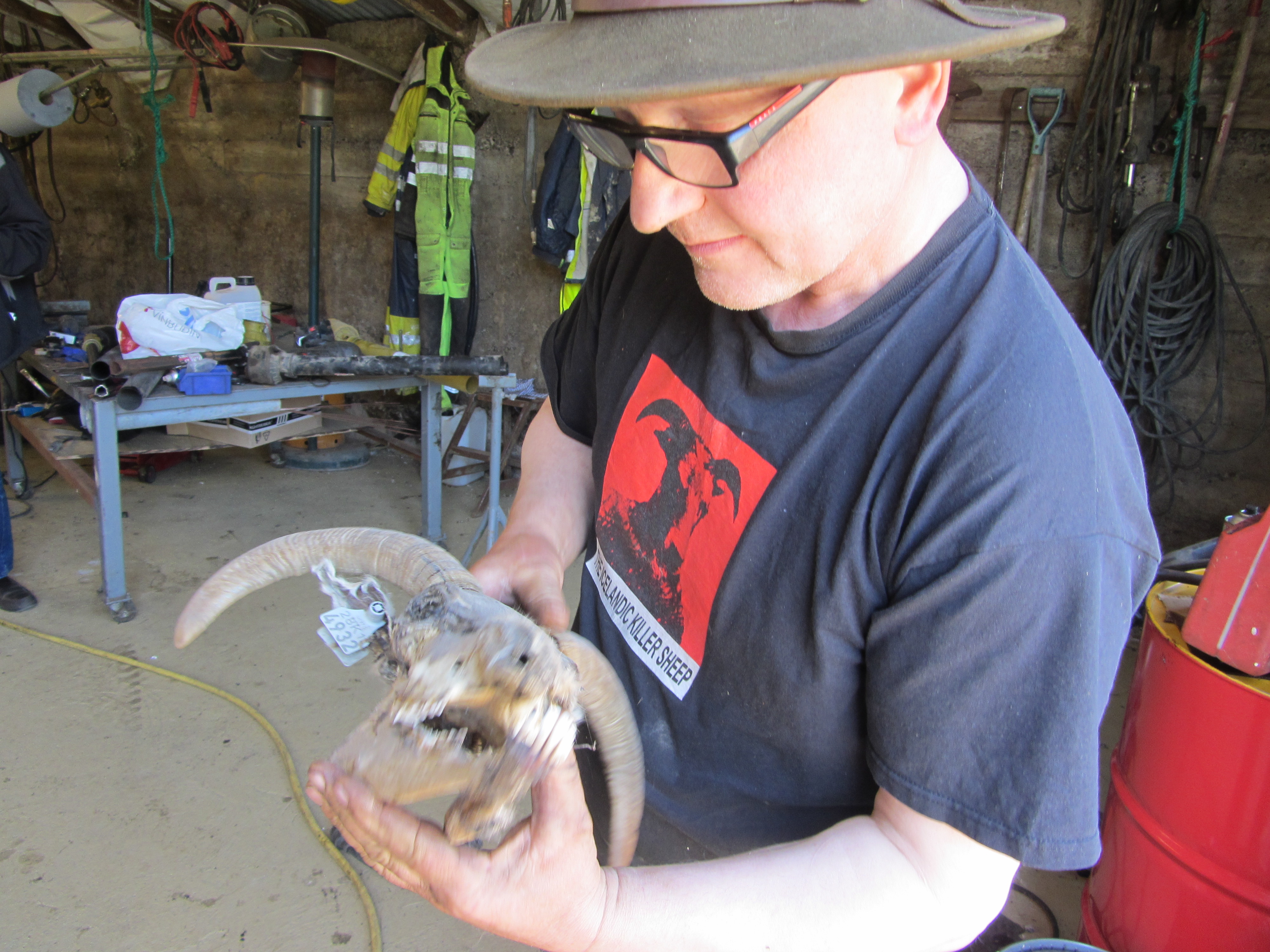
Sigurbjörn Hjaltason and his wife Bergþóra run a sheep farm at Kiðafell on the South side of the fjord, across the water from the 280 thousand ton aluminium smelter and Elkem’s steel alloy factory. Their sheep have recently developed swollen jaws and weak teeth which break easily and are, in some cases, unable to feed properly and have therefore died. Not satisfied with the industry’s own monitoring, they sent a few of their sheep heads for independent investigation and found fluoride levels of up to 1300-1400ppm, against a baseline (normal level) of 300-400ppm. Sigurbjörn and Bergþóra point out that Umhverfisstofnun (The Environment Agency of Iceland) give no maximum level of fluoride permitted in livestock teeth in Century Aluminum’s license, or elsewhere. Norðurál themselves use a guideline that is based on Norwegian research on young deer and suggests that between 1000 and 2000ppm can cause damage to teeth, and above 2000ppm damage is certain to occur. Sigurbjörn and Bergþóra claim that even this guideline is too high to prevent disease and even death of sheep as they have experienced.

Despite complaints regarding the unacceptably high levels for permitted fluoride, filed by Sigurbjörn and Bergþóra to Umhverfisstofnun and MAST (Iceland’s Food and Vetinary Authority), the situation has not improved.

A Story of Silence

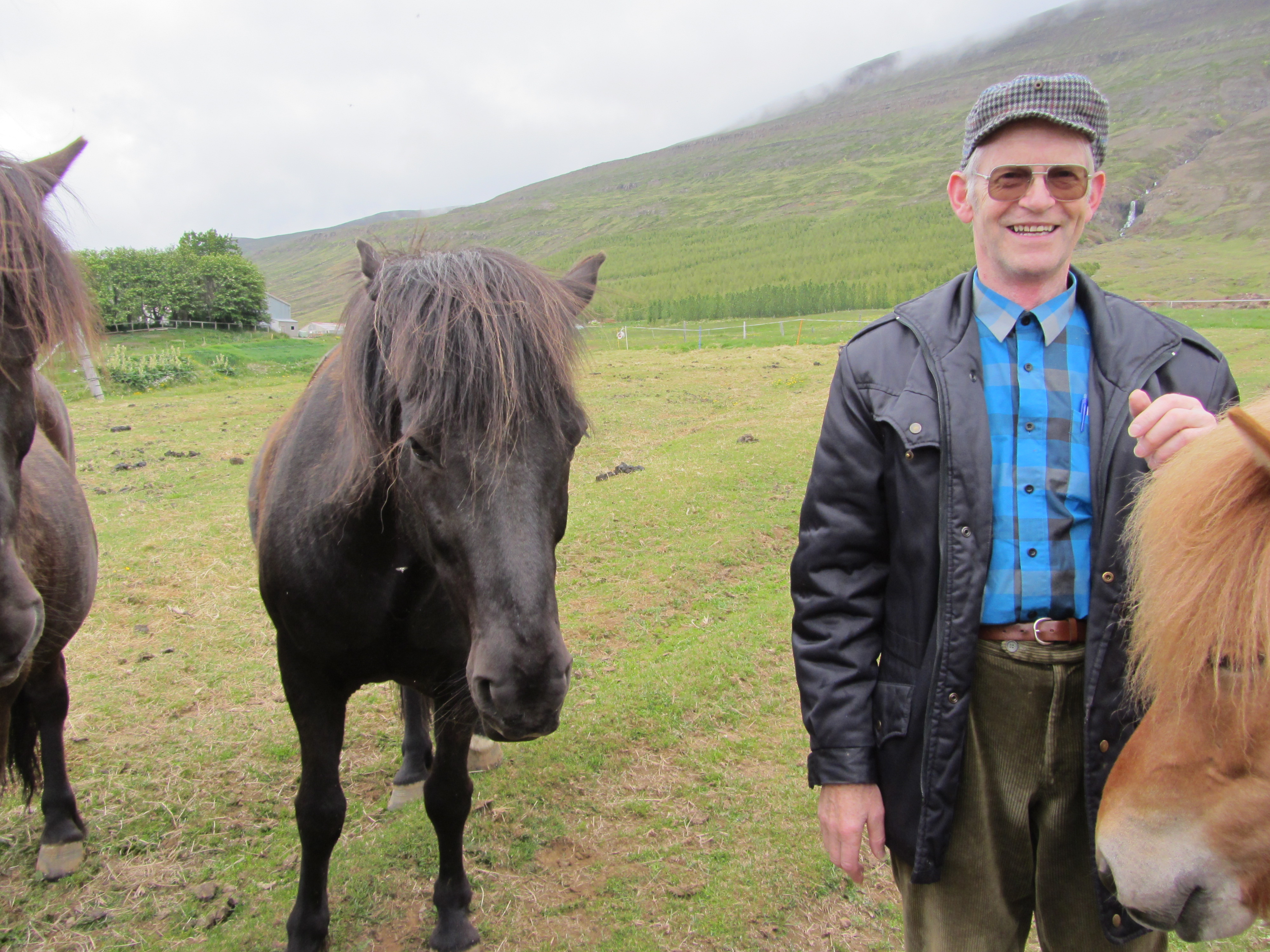
Across the fjord, about four kilometers West of the smelter, stands a farm called Kúludalsá. The owner, Ragnheiður Þorgrímsdóttir, runs an outdoor education center and keeps horses for pupils to ride and learn from. She has looked after horses since her childhood without problems, but in 2007 her horses suddenly started to get sick. They developed a build up of material in the neck and became stiff and unwell, in some cases too stiff to be able to walk. In an interview with Saving Iceland, she explained that in August 2006, while Century were expanding their smelter, a failure occurred in the plant’s scrubbing system with the results that raw fluoride was emitted for at least 20 hours. Local farmers were given no warnings or information, “They told no-one about it until many months later when they were forced to do so because the figures showed that something serious had happened” Ragnheiður said.

She wrote to MAST and requested a formal investigation in April 2009. The agency passed her request to Umhverfisstofnun who declined to act on it until two years later under public pressure. Ragnheiður had already sent samples of bones to local labs, discovering fluorine levels about four times higher than the estimated baseline, nevertheless still technically below the legal limit. In May 2011, she told her story on RÚV, Iceland’s National Broadcasting Service; only two days later she received a letter from Umhverfisstofnun, announcing their formal refusal to investigate the matter.

Finally in spring 2011, MAST agreed to investigate samples of horse teeth and bones from Kúludalsá. However, they didn’t examine fluoride in the liver and other organs as they had been requested to do, claiming that fluoride doesn’t build up in the soft tissues. Following their investigation MAST terminated her case, concluding that Ragnheiður could be blamed for the horses’ sickness herself which was due to overfeeding. At this point she decided to take matters into her own hands and sent samples to a foreign laboratory for further analysis. The lab found high fluoride levels in the liver, spleen, kidney and muscles, proving that fluoride had indeed been accumulating in the soft tissue of the animals – and suggesting that this may be an ongoing issue.

She wrote to the Minister of Environment in spring 2012, and later also to the Minister of Industry and Innovation. Finally in autumn 2012 she was able to meet with both of them and explain her situation in detail. She told Saving Iceland that the two ministers listened to her and resolved to further investigate the matter. They have now appointed two experts to look into the matter in more depth.

In an article on her website (Námshestar), published last autumn, Ragnheiður tells her story in detail through the whole period of her dealings with the authorities, from the moment she first noticed the horses’ illness up until the day of the article’s publication. Her conclusion is the following:

I have fought for in-depth research of the horses and their environment for a few years. Eventually, I was forced to do it myself. After the findings of tests on several biological specimens (monitoring that neither Iceland’s Environment Agency nor MAST were willing to conduct) I believe there to be a well-grounded suspicion that the horses are suffering from a metabolic disease (equine metabolic syndrome) as a result of too much fluoride in grass and hay. In addition to causing calcium deficiency in blood and damaging both teeth and bones, fluoride also impacts the activity of the thyroid which operates the body’s metabolism. Fluoride also wears away magnesium and other important substances.

Regarding her dealings with the authorities, she concludes by stating that her experience through the last years has taught her “not to expect important affairs to receive speedy and conscionable process within public administration in Iceland.” In particular she points out how the local authorities have actively ignored repeated warnings about pollution from the Grundartangi industrial complex and appear to be working for the interests of the industry rather than the people. This fits in with the Icelandic government’s original invitation to energy intensive heavy industry in 1995, which was entitled ‘Lowest Energy Prices!’ and promised ‘a minimum of red tape’ on environmental clearance for foreign industrial companies setting up in Iceland.

More Industry: More Pollution: Less Democracy

Century Aluminum (Norðurál) are supposed to measure fluoride levels around their Grundartangi plant, but according to local nature-protection organization, Umhverfisvaktin við Hvalfjörð (Hvalfjörður Environment Watch), the company stops monitoring the wider local area during the winter months – when pollution hangs in the fjord and is more intense – and, instead, only monitor fluoride levels right at the edge of the smelter, thus distorting the annual figures.

In 2011, Saving Iceland reported on the plans to expand the industrial area at Grundartangi in Hvalfjörður in order to house more polluting industries on top of the already existing ferro-silicon and aluminium plants. Despite more than 70 letters of opposition by local farmers, summer hut owners and others, the local authorities have accepted the planned expansion on behalf of the community. In one of these letters, Umhverfisvaktin pointed out that no proper assessment has yet been made regarding increased industrial pollution in the fjord and its environmental and livestock impacts. In response, the local authorities stated that there was no evidence to suggest that this should be taken into account.

The Most Environmentally Sensitive Smelter in the World!

In the beginning of last February, MAST published a report emphasizing the importance of monitoring the impacts of fluoride pollution in Reyðafjörður. The report states that although current fluoride levels are below maximum levels, a blind eye should not be turned to the possibility that too much fluoride will later damage the dental hygiene of young animals currently grazing at the most polluted areas. As their glaze is taking shape during the period from birth until they obtain permanent teeth, fluoride in too high numbers can endanger the quality of the glaze and damage the teeth up to two years post the absorption. Therefore, MAST states, it’s important to examine the bones of slaughtering animals and monitor the teeth of lambs and young sheep, foals and young horses, calfs kept for breeding, heifers and young dairy cattle – increasing both monitoring as well as the sampling locations.

One of the farms affected by fluoride pollution in East Iceland is Kollaleira, where local farmer Guðmundur Beck famously opposed the giant Alcoa smelter, claiming it would destroy the fjord he knew and loved. Guðmundur spoke to us about the recent pollution incident:

The news about fluoride pollution in Reyðarfjörður last autumn was just what had been warned of all the time, although I admit that it happened a few years earlier than I expected. Alcoa is trying to excuse this event as some kind of accident, when it seems to be a clear case of negligence. It certainly doesn’t fit with the widespread propaganda about “the most environmentally sensitive aluminium smelter in the world” that Alcoa has continuously spread around East-Iceland.

This event clearly underlines the profligacy of the aluminium industry and of the Icelandic authorities that allowed their operation. The experience from other smelters here in Iceland shows that it doesn’t matter how much they pollute – the companies are never fined or punished in other ways for breaking their operating license. And their operation is never amended.

____________________
1.  Christopher Bryson, 2004. The Fluoride Deception. Seven Stories Press.

Dec 05 2012
2 Comments

Angeli Novi’s Time Bomb Ticking in the Continuum of History


By Snorri Páll Jónsson Úlfhildarson, originally published in the Reykjavík Grapevine.

There is a photograph by Richard Peter of a statue of an angel overlooking the card-house-like ruins of Dresden. During three days in February 1945, the German city was annihilated by the allied forces using a new firestorm technique of simultaneously dropping bombs and incendiary devices onto the city.

The photo resonates with philosopher Walter Benjamin’s essay ‘On the Concept of History,’ in which he adds layers of meaning to a painting by Paul Klee titled ‘Angelus Novus’. Benjamin describes Klee’s angel as ‘The Angel of History’ whose face is turned towards the past. “Where we see the appearance of a chain of events, he sees one single catastrophe, which unceasingly piles rubble on top of rubble and hurls it before his feet.”

Wanting to “awaken the dead and to piece together what has been smashed,” the Angel’s wings are stretched out by a storm from Paradise, which “drives him irresistibly into the future, to which his back is turned, while the rubble-heap before him grows sky-high.”

“That which we call progress,” Benjamin concludes, “is this storm.”

Can You Stand in the Way of Progress?

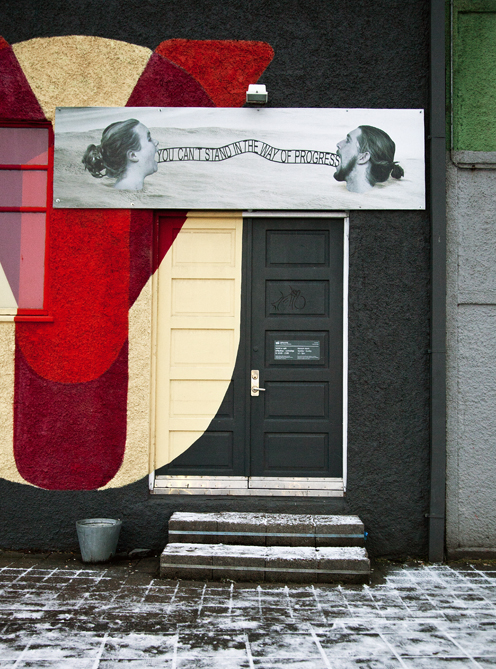
If the storm disenables us to fix the ruins of the past, what about preventing the storm from blowing? That would not be so simple according to art collective Angeli Novi, comprised of Steinunn Gunnlaugsdóttir and Ólafur Páll Sigurðsson, whose exhibition is currently showing at The Living Art Museum (Nýló).

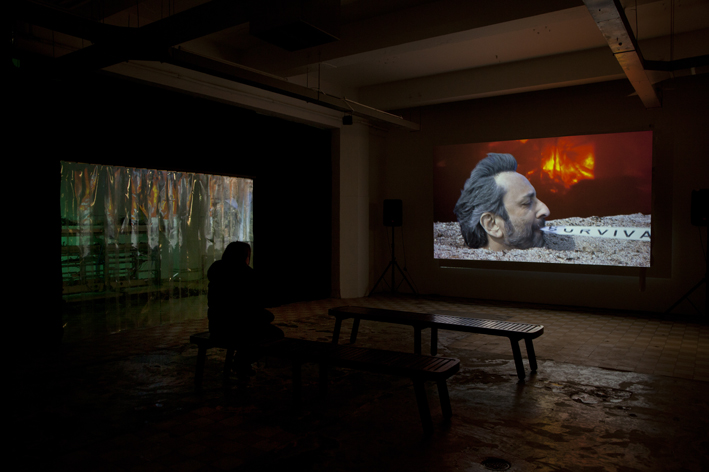
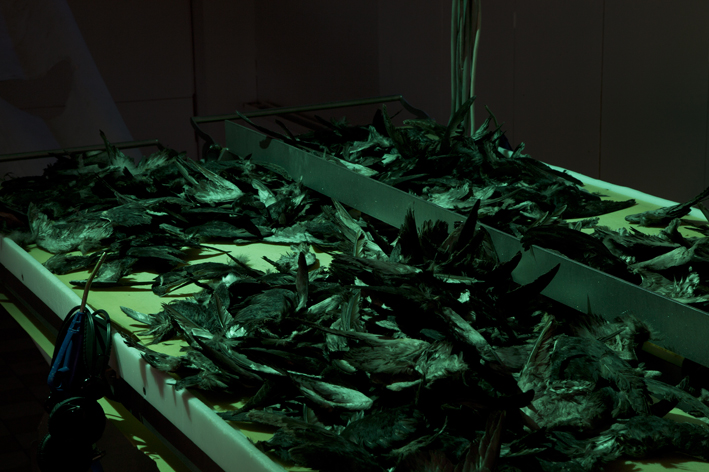
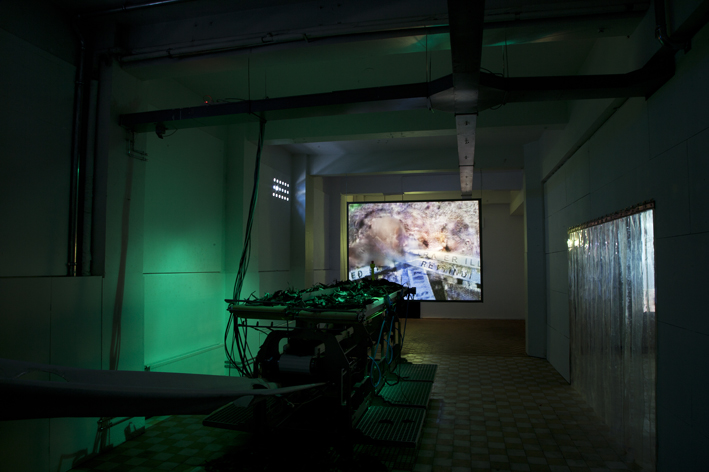
Under a confrontational title — ‘You Can’t Stand in the Way of Progress,’ shaped as the ‘Arbeit Macht Frei’ sign of Auschwitz — Angeli Novi have greatly altered the museum’s space with an installation of sculptures, soundscapes, smells and videos, including a 20-minute film of the same title as the exhibition. The film is a kind of kaleidoscopic time machine, examining the plight of generations which, one after the other, become tools and puppets of economic and historical structures.

In a well-cooked and stark manner — adjectives borrowed from Nýló’s director Gunnhildur Hauksdóttir — often shot through with streaks of black humour, the exhibition displays a dark image of Western civilization via versatile manifestations of the horrors embedded in capitalism, industrialism, nationalism, religion, the dualistic and linear thought of occidental culture, and the individual’s buried-alive position in society.

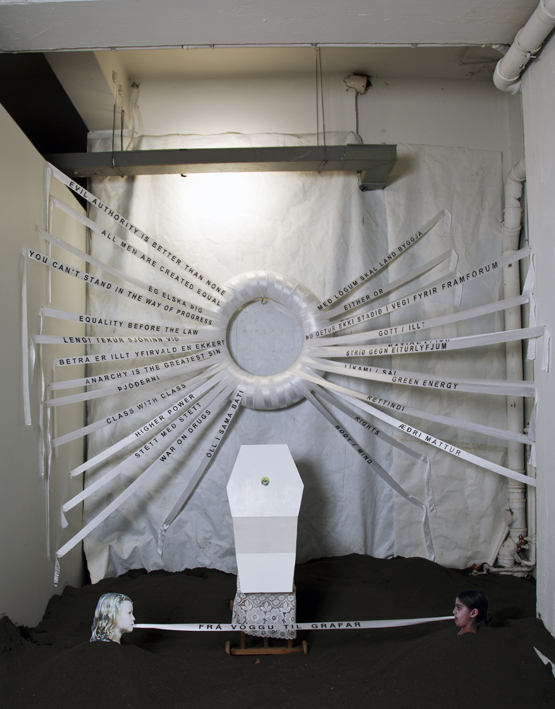
The metaphor here is literal as the only visible body-parts of the film’s thirty protagonists are their heads. The rest are buried under ground. Between themselves, their chewing mouths fight over ceremonial ribbons carrying a collection of Western society’s fundamental values, doctrines and clichés, in a dynamic collision with a collage of significant images behind them — “the history of Western thought,” as author Steinar Bragi points out. Towering over a coffin shaped as a baby’s cot, located in a mausoleum at the museum’s entrance, the same ribbons have been tied onto a funeral wreath. A single cliché, “From the Cradle to the Grave,” hangs between the mouths of two children’s heads that stick out of the black sand below the coffin. A smooth corporate female voice greets the visitors: “Welcome to our world!”

I Sense, Therefore I Think

“It’s very pessimistic,” Steinar Bragi says during our conversation in a bunker-like room of Nýló. “The film shows us disembodied beasts, fighting over the phrases that our entire society is built upon. I always see the head as the rational approach to life, stuck in these dualistic pairs that are so far from reality as I experience it. We have sensibilities, then emotions, and finally there are words and reason. Reason is useful for certain tasks, when one has to go from place A to place B, but it’s only a tool to be used on something far more extensive.”

Steinar and I agree that society is constantly simplified into Cartesian dualism — “I think, therefore I am” — the ground zero of Western thought. And while dualism doesn’t necessarily reject sensibilities and emotions, Steinar maintains that it locates reason on a higher level. “Reason is expected to control, which it certainly does in a small and unglamorous context, but it’s only an expression of what lies beneath.”

Enemies of Progress?

It’s clear that the core of this rationalism is simplification such as how political and social conflicts tend to be reduced to a fight between alleged good and evil forces. This not only brings us to the religious nature of the myth of progress, but also the power of language. Because “although they are hollow and empty and repeatedly chewed on, these phrases are also very powerful,” as literary scholar Benedikt Hjartarson points out. “They conduct the way society is shaped. They manifest the social and economic reality we live with.”

As former director of US aluminium corporation Alcoa Alain Belda told the newspaper Morgunblaðið in March 2003: “Some people are against progress.” He was referring to the opponents of the Kárahnjúkar dams, constructed in Iceland’s highlands to create energy for Alcoa’s smelter. “But fortunately,” he continued, “the world is growing and people are requesting better lives.”

Such an argument equals economic growth and people’s welfare, portraying the megaproject’s opponents as enemies of progress. At the same time it negates the destructive nature of progress, manifested for instance in the culturally genocidal impacts — in the form of displacement of populations — and irreversible environmental destruction often associated with large-scale energy production, and how the lives of whole generations are wasted by wars waged for power and profit.

“We see this contradiction within modernity,” Benedikt continues, “how the idea of progress thrives on destruction and always calls for annihilation.” But unlike the revolutionary destruction encouraged by 19th Century anarchist philosopher Michail Bakunin — who stated, “the passion for destruction is a creative passion too!” — the annihilation inherent to progress is rather used as a stimulus for an unaltered continuum of the status quo under the pretext of development. Thus, the contradictory nature is evident again, as well as the religious one: “The present is never here,” Benedikt says, “it’s always something we are aiming for.”

Violence Intrinsic to Social Contracts

The film displays a great amount of violence, which musician Teitur Magnússon sees with a strong reference to alienation. “One feels like it’s somehow supernatural, like it’s not the work of humanity but rather of a monster that’s eating everything up, and we don’t seem to have any control of it.”

Artist Bryndís Hrönn Ragnarsdóttir furthermore connects this brutality with authority. “Humans aren’t able to handle more power than over themselves,” she says. “As soon as someone is granted higher power, violence enters the picture.” She maintains that some sort of violence is intrinsic to all simplifications — “all of society’s attempts to try and settle upon something” — meaning a wide range of social contracts, from organized religion to written and unwritten rules regarding people’s behaviour.

A Leap Into the Future

As Angeli Novi’s subject is not only complex but also polarized — layered with our cultural history of construction and destruction, repression and revolt — the exhibition doesn’t preach any simple solutions to the great problems it addresses. Such attempts are often just as contradictory as the myth of progress itself, or as philosopher Slavoj Žižek ironically sums up in his analysis of what he calls ‘a decaf reality,’ when the “very thing which causes damage should already be the medicine.”

Thus, one cannot resist wondering if there actually is a way out of the horrors analysed and manifested in the exhibition. Or is humanity bound to be stuck in a premature burial while the seemingly unstoppable catastrophe witnessed by Benjamin’s Angel of History keeps on enlarging into eternity?

With images referring to France’s July Revolution of 1830, Angeli Novi reject such a vision and suggest instead a peculiarly creative approach to revolt. Already during the revolution’s first day, clocks on church towers and palaces all over Paris were shot down and destroyed, signifying the urgent need to nullify predominant social structures and ideologies by putting an end to the time of the oppressors.

In continuum of this rebellious tradition of what philosopher Herbert Marcuse referred to as “arresting time” — directly related to what William Burroughs called “blowing a hole in time” — Angeli Novi transcend the well known demand for “all power to the people” with a leap into the future, granting wings to the mind and calling for all power to the imagination.

_______________________________________________________________

See also:

Saving Iceland: Kárahnjúkar Dam Blown Up in New Film by Angeli Novi

Jón Proppé: Standing in the way of progress

Þóroddur Bjarnason: Jafnvægislist (Icelandic only)

Angeli Novi’s webiste

Aug 29 2012
5 Comments

Hellisheiði: A Geothermal Embarrassment


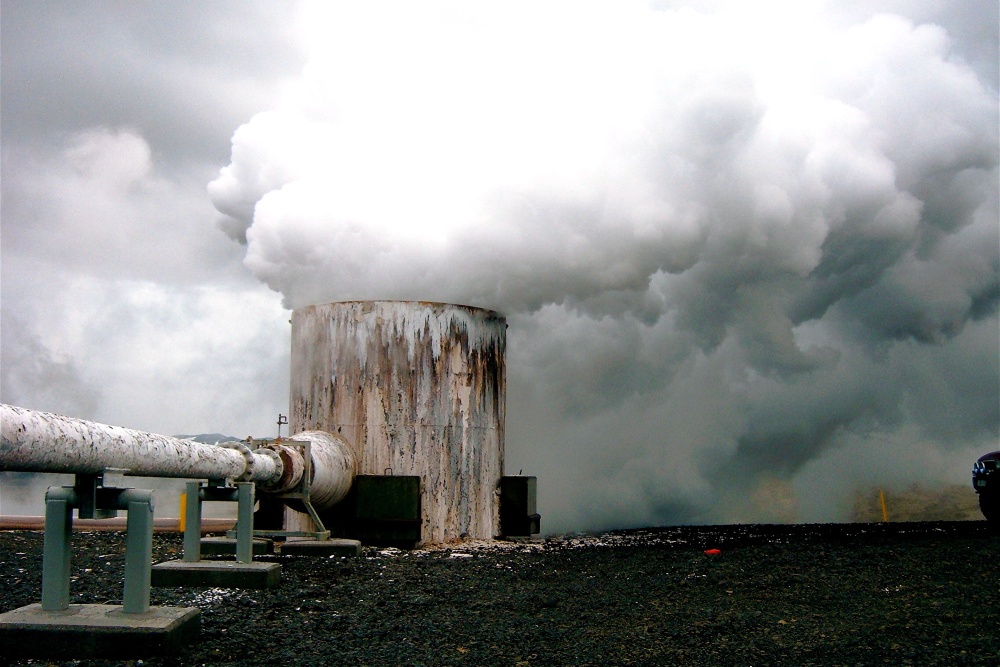
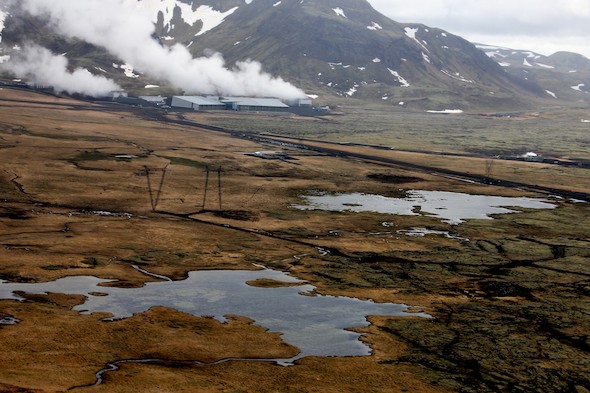
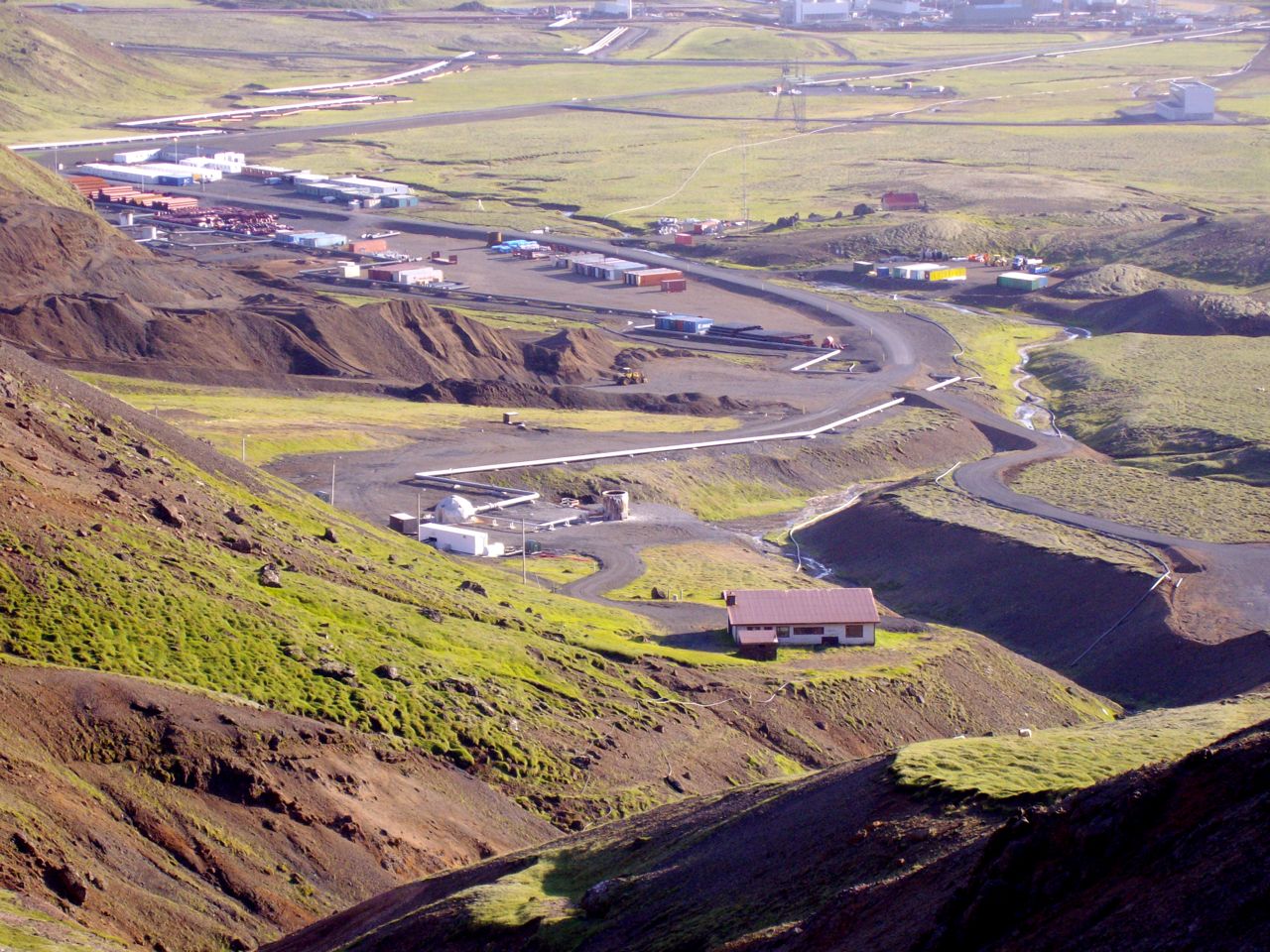
While driving Iceland’s national ring road, in a southerly direction from Reykjavík, one cannot miss noticing the steam coming up from an extraordinarily grey infrastructure covering a large piece of land around mount Hengill, approximately 30 km from the capital. Filled with roads, drills, pipelines, and a large powerhouse, this once untouched geothermal area is now the site of the Hellisheiði geothermal power plant, operated by the publicly owned Reykjavík Energy (“Orkuveita Reykjavíkur” in Icelandic, abbreviated “OR”), generating electricity almost entirely for aluminium production.

Geothermal energy is commonly praised as a “green” alternative to environmentally unfriendly power sources such as fossil fuels, coals and nuclear energy. As a result of “the development of what were once thought to be non-viable resources”, a glossy brochure from engineering firm Mannvit states, “more and more public and private entities are looking into geothermal power as part of their strategy to mitigate global warming while still meeting growing energy demands.” In a promotional text for the Geothermal Energy Exhibition at Hellisheiði, the plant is said to be a “striking example of how geothermal energy is harnessed in a sustainable manner in Iceland and a showcase for the rest of the world.” Additionally, Reykjavík Energy has not hesitated maintaining that “general public opinion of exploiting the geothermal resources in the Hengill region is positive.”

So many men, so many minds. Only about ten kilometres away from the plant stands the small town of Hveragerði, wherein one gets to hear a completely different story. “We cannot accept that OR will be permitted to continue polluting the atmosphere,” Hallgrímur Þ. Magnússon, clinical doctor in Hveragerði said to newspaper DV last June. A few days earlier he had voiced his worries to local newspaper Sunnlenska, encouraging the town’s residents to start taking magnesium and iodide supplements to counteract the health impacts of the power plant’s sulphur (hydrogen sulphide) pollution. “I maintain that the pollution is of such quantity that the human body needs those two materials in order to resist the effects,” Hallgrímur said to Sunnlenska.

Recent inspection makes it clear that the sulphur pollution, which does not only reach to Hveragerði but also to Reykjavík, often goes far above Icelandic and international standards. In the case of Hveragerði, the quantity of polluting materials in the atmosphere is such that the town should be considered within the plant’s dilution area (the area in which residential homes are not permitted).

EFFLUENT LAGOONS AND MANMADE EARTHQUAKES

Unfortunately for the burgeoning and PR heavy Icelandic energy sector, the green image of geothermal power has been repeatedly challenged lately. In particular regarding the country’s and, in fact, the world’s biggest geothermal plant at Hellisheiði. Two new unplanned effluent lagoons were recently discovered close to the plant, where waste water from geothermal pumping had leaked out onto the surface. Environmentalist and journalist Ómar Ragnarsson, who originally discovered the lagoons, followed the story by publishing his own photographs of similar lakes created by other geothermal plants, such as those by the plants at Reykjanes, Svartsengi, Nesjavellir and Bjarnarflag1. These lakes can be very dangerous to local freshwater systems, as Saving Iceland’s Jaap Krater and Miriam Rose explain in a book chapter on the development of geothermal harnessing in Iceland:

Geothermal fluids contain high concentrations of heavy metals and other toxic elements, including radon, arsenic, mercury, ammonia and boron, which are damaging to the freshwater systems into which they are released as waste water. Arsenic concentrations of 0.5 to 4.6 ppm are found in waste water released from geothermal power plants; the WHO recommends a maximum 0.01 ppm in drinking water.2

Yet another backlash for the geothermal industry is a recent study, carried out by Hanne Krage Carlsen, whose results were published in the international Environmental Research journal earlier this year3. The study shows a direct link between the plant’s sulphur pollution and increased purchase of asthma medicine among the residents of the greater Reykjavík area. New examination of vegetation in the Hellisheiði area also shows that the sulphur pollution has damaged large quantities of moss, which according to Magnea Magnúsdóttir who carried out the examination, will take decades to recover4. OR claims that the results of the plant’s Environmental Impact Assessment “indicate that construction of the plant will not have a lasting influence on the area’s vegetation” — something which, according to this recent information, needs to be questioned.

POLLUTION ABOVE GUIDELINE LIMITS

During OR’s Annual General Meeting (AGM) last June, it was revealed that Hveragerði is inside an area wherein sulphur (hydrogen sulphide) pollution is above the current guideline limits. New rules are supposed to go through in 2014, according to which the guideline limits will be strict 50 micrograms per square-meter per 24 hours. The authorities will also be obliged to alarm the public each time the pollution goes above that limit.

Though they admit the plant’s high concentration of polluting emissions, OR has said that the company will not able to adapt to the new rules until 2019 at the earliest. Therefore, the company will ask for an exception, to which the people of Hveragerði are heavily opposed. In an interview with Iceland’s National Broadcasting Service (RÚV), the town’s Mayor Aldís Hafsteinsdóttir protested against the company’s request, stating that OR had obviously rushed way too fast when preparing and building the plant and thus underestimated its environmental impacts. In a separate interview with Saving Iceland’s Miriam Rose this June, Aldís emphasized this point:

We feel very much like victims of all of this. This town has been here for 70 years and the power plant has only been here for 10 or 15. They should have considered the effects on the neighbourhood they were putting it in. It is absolutely obvious that the plant is situated too close to our town, as there are so many impacts that affect daily life here in Hveragerði.

Adding fuel to such criticism, Minister of the Environment Svandís Svavarsdóttir followed in the footsteps of many environmentalists and told RÚV, in an interview last June, that OR had been nothing but the puppet of heavy industry for the last years. That explains not only the company’s poor financial situation but also the environmental catastrophe at Hellisheiði, Svandís said. Mayor Aldís agrees: “They [OR] have sold their energy to the aluminium smelters way too cheap and now they can’t afford to reduce their pollution. That is, in my opinion, the reason why they are trying to stop the new regulations.”

DILUTION AREA: BIGGER THAN OF ALUMINIUM SMELTERS

The Hellisheiði plant started operating in 2006 and has since then seen two expansions, in 2008 and 2011, leading to increased sulphur pollution. Most of the energy goes to the aluminium smelter in Grundartangi, owned and operated by the North-American Century Aluminium, which then again is owned by mining and commodities giant Glencore.

Demonstrating Iceland’s haphazard approach to the development of geothermal energy, the Hellisheiði power plants’ dilution area has yet to be defined after six years of operation. However, it is clear from recent evidence that the dilution areas for geothermal plants should be much larger than for other polluting industries in Iceland — much bigger, for instance, than Rio Tinto Alcan’s aluminium smelter in Straumsvík and Century’s in Grundartangi, as reported by newspaper Morgunblaðið in June5. During OR’s recent AGM, their environmental director Hólmfríður Sigurðardóttir, admitted that she could not guarantee that the health of people living inside the area where pollution is above guideline limits (i.e. people living inside the dilution area) is not negatively affected by the pollution. Permanent residence is, in fact, prohibited inside such areas by law and land use is restricted to several limitations.

Interestingly, the Environmental Impact Assessment (EIA) for the Hellisheiði power station, carried out by engineering firm VGK on behalf of OR, overlooked the potential impacts on Hveragerði altogether, though it did take into consideration the negligible impacts on Þorlákshöfn and other towns much further away from the plant.

In September 2011 more than 1500 earthquakes were felt in Hveragerði in a single day, with other quakes going on for several weeks, some up to 4 on the Richter scale6. At first OR denied any culpability in the incident, though the residents immediately recognised the quakes as being unusual as many were focused on a single spot. However, after a few days they admitted that they had been pumping geothermal effluent water back into the ground, which is necessary to prevent surface pollution, but is well known by geologists to be a cause of man-made earthquakes. OR responded to the resident’s outrage over the quakes by holding a public meeting in which they claimed they were simply speeding up the release of earthquakes that would have happened anyway in the future. To this local resident Einar Bergmundur stood up and stated: “That is a very good argument. I am also sure I am going to die one day, but that doesn’t give you the right to kill me today to speed the process up?”

THE GUINEA PIGS OF HVERAGERÐI

In January this year some residents of Hveragerði started experiencing breathlessness, coughing and nausea as well as a strong sulphurous smell. They called Aldís to ask what was going on. Thanks to a monitoring site the residents had requested OR to install on their kindergarten, Aldís was able to see that hydrogen sulphide levels had persistently been in the hundreds of micrograms for more than a week. One day they had reached 337µg, more than double the current regulations, and almost seven times higher than the new regulations would allow. With the man-made earthquakes still on their minds, the residents were furious. Aldís told us that despite this breach of regulations no action seems to have been taken by OR:

I just can’t believe that this is how it is supposed to be — that the locals are supposed to monitor these levels themselves. There must be some institution that is supposed to take care of the people and make sure that we are not breathing this. But it did not happen. We live here, we have kids, the elderly are fragile and some have bad lungs. They [OR] are experimenting with these technologies as they build the plants. If they wanted to use us, the inhabitants of Hveragerði as guinea pigs they should have asked us first and not let everything that has happened here come as a surprise. They must have known better before they started this project and that is a fact the makes us angry. Our experience of the Hellisheiði power plant teaches us that not a single plant should be built here in the vicinity before they have a complete control of those matters that have gone wrong in Hellisheiði.

In response to such criticism, OR published a press releases claiming that there are no health risks at that level of exposure and that much of the science which says so is contended. They invite people to visit the plant and breathe the fumes, and even suggest that up to 14,000µg of Hydrogen Sulphide is acceptable to breathe for up to 8 hours7.

The World Health Organisation (WHO) does not agree. They state that concentrations above 280µg can cause breathing problems, followed by eye irritation at 500µg, loss of energy and increased lactic acid in the blood at 700µg, and finally headaches, irritability, dizziness, memory loss and fatigue at 2800µg. By 14,000µg people tend to suffer “olfactory paralysis” — a shut down of sense of smell which prevents them from noticing the odour and accompanying dangers. The WHO recommends a maximum guideline of 150 µg/m3 for a 24 hour period to ensure “the absence of appreciable risks that can cause adverse health effects” whereas the Californian regulation limits Hydrogen Sulphide emissions to 43 µg/m3 for more than an hour to prevent strong smell8. Iceland’s current regulations are weak by international standards and even these weak standards are not being enforced.

In the same press release OR presented a diagram of emissions from Hellisheiði showing that 99.49% of the steam released from the power plant is made up of water, while only 0.42% is CO2 and 0.08% Hydrogen Sulphide. This is a clear attempt at greenwashing the reality, as it is self evident that steam is largely made up of water and that this is not how sulphur concentrations in the environment are measured. These widely broadcast figures try to downplay well established science in what Aldís called “an insult to the intelligence of the people of Hveragerði.”

REYKJAVÍK’S CITY COUNCIL OPERATING AGAINST ITS OWN POLICY

Yet another 90 MW expansion is now planned in the area of Hverahlíð, south of the Hellisheiði plant and even closer to Hveragerði. The Hverahlíð plant is supposed to generate energy for another Century smelter, which currently stands half built and collecting dust in Helguvík, close to the Keflavík International Airport. The Helguvík project has been criticised from the beginning of its construction in 2008, not only for environmental reasons but also for the major energy uncertainty the project has long faced. During the smelter’s ceremonial first shovelling — interrupted by Saving Iceland activists who rightly named it “Century’s Lack Of Permission Party” as the company did not have any permissions but to construct the building itself — Century’s director in Iceland, Ragnar Guðmundsson, said that he hoped the energy issues would be sorted in late 2010, when the smelter’s first phase would be complete.

Today the unfinished building stands like a skeleton at the construction site while the energy issue remains unsolved. Century has signed contracts with two energy companies, OR and HS Orka — the latter owned mostly by Canadian firm Alterra Power and partly by Icelandic pension funds — but neither company has been able to guarantee any energy. HS Orka hopes to be allowed to drill in the geothermal areas of the Reykjanes peninsula — a large-scale construction that would not only permanently alter the peninsula’s unique nature, but also, as many scientists have claimed, not produce enough energy for the Helguvík smelter.

OR, on the other hand, bets on Hverahlíð as an electricity supplier for Helguvík. But the company is heavily indebted after its recent aluminium adventures, which is one of the reasons the contract with Century should be breached, says Sóley Tómasdóttir from the Left Green party (“Vinstri græn”) and board member of OR. In an interview with RÚV in April this year, she maintained that the company should focus on the environmental impacts at Hellisheiði before even thinking about building new plants. She also criticised the current majority of Reykjavík’s city council (composed of the social democratic “Samfylkingin” and the centrist “Besti flokkurinn,” a new party that won the city elections in 2010), for not standing by its promises to stop selling new power from the publicly owned energy company to heavy industry projects.

In the same interview, Haraldur Flosi Ólafsson, chairman of the board, responded to this criticism by maintaining that despite the current majority’s official opposition to developing any further energy for aluminium production, the company would have to abide to already existing contracts. The Century contract is originally from 2006 but was renewed in late December 2008, less than three months after Iceland’s infamous economic collapse. At the aforementioned AGM, Haraldur’s words were echoed by the company’s director Bjarni Bjarnason, who said that in his opinion all future plans for building new power plants should be abandoned, as building new plants for private entities goes against the company’s current policy. However, Bjarni stated, already existing contracts needs to be abided.

Sóley disagrees, pointing out a clause in the contract, which should allow for the company’s withdrawal if it does not have the financial capacity to fund the project. But instead of doing so, OR is now planning to finance the Hverahlíð plant with the assistance of Icelandic pension funds. Such a step is generally seen as very controversial (such as in the heavily criticised case of HS Orka) and as the first step on the way to the privatisation of Iceland’s nature.

NEITHER SUSTAINABLE NOR RENEWABLE

The impacts of sulphur pollution, man made earthquakes and effluent lagoons appearing at Hellisheiði are of great importance in Iceland in view of the large scale geothermal plans which are increasingly being promoted in Mývatn and Reykjanes peninsula. According to the recently published parliamentary resolution for the so-called Master Plan for Hydro and Geothermal Energy Resources in Iceland, these geothermal power plans are definitely “on”, while several planned hydro dams are now “off”.

Effluent lagoons have already been discovered at test drilling sites at Þeistareykir and Bjarnarflag in the North9. If all of the planned geothermal power plants are built around Mývatn, the town of Reykahlíð will become exposed to 32,000 tons of hydrogen sulphide per year potentially raising serious health issues for residents10. In Reykjanes the two existing geothermal power plants at Svartsengi and Rekjanesvirkjun already produce huge amounts of hydrogen sulphide, and the proposed expansions and new projects would radically increase this figure. Scientists have warned that geothermal fields at Svartsengi are already overexploited and may not be able to produce power much longer11. In addition many of the new proposed drilling sites are connected to the same geothermal aquifer and could very quickly become dried or cooled by excessive exploitation for large scale energy. For further information read Saving Iceland’s detailed account of the planned geothermal power projects on Reykjanes peninsula.)

The fact is that geothermal energy technology is still very new and little is known about the long term, or even short term effects of exploiting the heat of volcanic aquifers on such a large scale. In addition, geothermal areas are globally incredibly rare and each one is different, making the impacts of drilling and power generation hard to predict. Cambridge University professor David McKay’s comprehensive 2009 book on sustainable energy points out that geothermal power is neither sustainable nor renewable when used on a commercial scale as the wells can quickly dry up or cool down, taking more than a hundred years to recover afterwards12, yet drastically altering the local environment. Experimenting with such an undeveloped technology in Iceland’s endemic geothermal hot spring areas, which the country is so famous for, could result in total destruction of these beautiful and unique places. All that for only a few years of energy production, which in turn would be sold at a cut rate price to heavy industry, reaping little reward for Icelandic people.

See Saving Iceland’s photos of the effects of drilling at Hellisheiði here. The photos are from 2008 when Saving Iceland’s then annual action camp against heavy industry was located at Hellisheiði. Read More

Aug 29 2012

Global Day of Action Against Vedanta Draws Thousands in London, Odisha and Goa!


News from our friends at Foil Vedanta:

More than 100 protesters from Foil Vedanta and other organisations crowded the entrance to British mining company Vedanta Resources’ London AGM and poured red paint on the steps on Tuesday in an attempt to disrupt the meeting. In Goa and Odisha in India where Vedanta operates, parallel demonstrations involving thousands of people affected by the company’s activities took place on Monday and Tuesday. Inside the AGM the meeting was once again dominated by dissident shareholders who pointed out Vedanta’s racism, major environmental and social violations and poor governance.

See the Foil Vedanta website for further information and photos.

Jun 07 2012
3 Comments

Accused of Betrayal Because of His Opinions


On May 18, Icelandic newspaper DV published an interview with Janne Sigurðsson, director of Alcoa Fjarðaál since the beginning of this year. In the interview, Janne describes, amongst other things, crisis meetings that were held within the company due to the protests against the construction of the Kárahnjúkar dams and the aluminium smelter in Reyðarfjörður. With gross and incongruous sentimentality she compares the society in Eastern Iceland, during the time of the construction, with a dying grandmother, whose cure is fought against by the anti-Alcoa protesters. Janne also maintains — and is conveniently not asked to provide the factual backup — that only five people from the East were opposed to these constructions.

On May 21, however, DV published an interview with Þórhallur Þorsteinsson, one of the people from Eastern Iceland who had the courage to oppose the construction. In the interview, which turns Janne’s claims upside down, it emerges how heavy the oppression was in the East during the preamble and the building of the dams and smelter was — people where “oppressed into obedience” as Þórhallur phrases it. He talks about his experience, loss of friends, murder threats, the attempts of influential people to dispel him from his work, and the way the Icelandic police — and the national church — dealt with the protest camps organized by Saving Iceland, which lead him to wonder if he actually lived in a police state.
Þórhallur Þorsteinsson is one of the people from Eastern Iceland who protested against the construction of the Kárahnjúkar dams. For that sake, he was bandied about as an “environmentalist traitor”, accused of standing in the way of the progress of society. Influential people attempted to dispel him from his job, he had to answer for his opinions in front of his employers, and his friends turned against him. The preparations for the construction started in 1999, but the construction itself started in 2002. The power plant started operating in 2007 but the wounds have not healed though a few years have passed since the conflict reached its climax.

“There are certain homes here in Egilsstaðir that I do not enter due to the conflict. Before, I used to visit these homes once or twice a week. I am not sure if I would be welcome there today. Maybe. But in these homes I was, without grounds, hurt so badly that I have no reason to go there again. Now I greet these people but I have no reason to enter their homes. I was virtually persecuted,” Þórhallur says, sitting in an armchair in his home in Egilsstaðir.

His home bears strong signs for his love of nature, his bookshelves are filled with books about the Icelandic highlands, nature and animals. For decades, Þórhallur has travelled in the highlands and did thus know this area [the land destroyed by the Kárahnjúkar dams] better than most people. “I had been travelling in this area for decades. I had gone there hiking and driving and I have also flown over it. I went there in winters just as in the summers. I went there as a guide and I knew the area very well. So I am not one of those who just speak about this area but have never got to know it.”
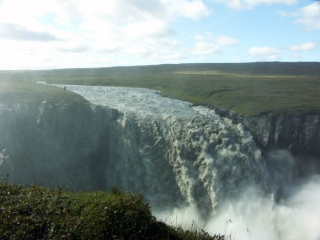
Not only did he know the land but also cared for it. He was hurt to see it drowned by the reservoir and has never managed to accept its destruction. “I am immensely unhappy with everything regarding this project. The dams, the [Alcoa] aluminium smelter, the environmental impacts, and additionally, it has not brought us what was expected. Thus I find hardly anything positive about this,” Þórhallur says.

“The sacrifice of this part of the highlands, the environmental impacts of these constructions, just can not be justified. Waterfalls by the dozen, many of them extremely beautiful, are rapidly disappearing and are just about waterless. A highly remarkable land went under water, under the reservoir, for instance Hálsinn which was the main breeding ground for reindeer. Additionally, this was the only place in Iceland with continuous vegetation from the sea, all the way up to the glacier. This has now be interrupted by Hálslón [the reservoir].”

The Resistance in the East

During the journalist’s trip around Eastern Iceland, many of the locals spoke a lot about how artists from 101 Reykjavík [the center of the city] protested against the construction. Þórhallur, however, points out that the original resistance against the project was formed in the local region. “People tend to forget this fact all the time, as they only speak about 101 Reykjavík. Before the conflict started, an association for the protection of Eastern Iceland’s highlands was founded here. It was founded with the purpose of opposing the construction — Kárahnjúkar had not even entered public discussion at that point although we, of course, knew about it.”

About thirty people joined the inaugural meeting and agreed upon the importance of such an association. Soon, a few people left the organization. “Those who had an opposite opinion compared to what people generally thought about the project were oppressed. The picture was painted in a way suggesting that the residents of Eastern Iceland should stand together. The rest of us, who were against the project, were not considered true members of this society. And we were not good citizens at all. In people’s minds, we were traitors. We were the people who wanted to send people back to the turf huts, as they used to say. We were said to be against development, against creating a good future for our children. All this was thrown at us, that the children would not come back home after studying, that they would not get any jobs. By opposing the construction, I was, in these people’s minds, taking away their children’s future livelihood, preventing the creation of jobs, and lowering real estate prices here in the east. I got to hear all of this. This is how it was.”

The First Protests

At a certain point, the verbal abuse was taken further than can be considered normal. “My life was threatened. A man that I used to work with met me in the street and said that I ought to be shot. Of course, it was painful to live through this, it hurt because they were trying to oppress me. They personified the issue so they could portray me as if I was taking something away from people, as if I was preventing the people here from living an ordinary life. This was the attitude.

I have lived here since I was a little kid and from early age I have been contributing to this community. I have partaken in building it up, socially and as an individual. I have been here all my life. Despite my opposition to this construction, I did not consider myself being any less of a member of this community. Nothing of what I have done justifies the accusations of me wanting to ruin this community. I was simply against this construction. But just like others, I was to be suppressed into obedience.”

Despite all this, Þórhallur refused to throw away his ideals and stay silent. Determined not to be silenced, he continued his fight with both words and actions. “I am probably the only resident in Eastern Iceland who ever has been fined for opposing the Kárahnjúkar dams [in fact Gudmundur Mar Beck, farmer at Kollaleyra in Reydarfjordur (site of the ALCOA smelter) was also fined a hefty sum for protesting against the project. Ed. SI.org]. Along with others, I blockaded a bridge over river Besstastaðaá and was fined,” he says and adds that he did happily pay the fine. “This action was symbolic for the situation at that time, as a token of the fact that the case had become insolvable. We didn’t intend to completely prevent these people from continuing their way,” Þórhallur says. These people were the board of Landsvirkjun [Iceland’s national energy company] as well as Ingibjörg Sólrún Gísladóttir, then mayor of Reykjavík [later Minister for Foreign Affairs in the government that was toppled by protesters during the winter of 2008-9], and the area that was at stake at that time was Eyjabakkar wetlands. “We read two statements out loud, from the Association for the Protection of Eastern Iceland’s Highlands, and after that the protest was over.”

He does not regret this, even though he had to face the consequences his actions. “I was there in my spare time but at this time I worked for the The State Electric Power Works. Following the protest, we witnessed one of the worst witch-hunting periods in the history of Eastern Iceland. The severity is very memorable to me.”

Harsh Attacks

This protest had been organized by Þórhallur as well as Karen Egilsdóttir, who was an elementary school teacher, and Hrafnkell A. Jónsson, who has now passed away. “Parents phoned the school’s headmaster and demanded that their kids would not have to go to her classes. Politicians in the East systematically tried to get me fired from my job. They phoned both the State’s and the Region’s electric utility directors, demanding that I would be fired because of a thing I did in my spare time. These same men constantly interrupted the Chairman of RARIK [Iceland State Electricity] and I had to stand up for my opinions. I had to show up in front of the Region’s electric utility director and proof that I had been at the protest during my spare time. And as my words were not enough, I had to get my supervisor to come and proof it. Everything was tried. It was harsh.

And when I was informed that very influential people in the East, respected members of their society, were trying to get back at me and get me dispelled from work because of my opinions, I got a very strange feeling regarding what kind of a society I live in.

I also witnessed the behaviour of the police who chased protesters around the highlands, which made me wonder if I lived in a police state. The police tried to prevent protesters from resting by putting wailing sirens on during the middle of the nights, they constantly drove past them and around their cars, took photographs during darkness using flash, and blocked roads so that people could not bring them food. I saw all of this taking place.”

Always Knew of More Opponents

For two years in a row, the protesters set up camps in the highlands. During the first summer [2005], the protest camp was pitched on a land owned by the Bishop’s Office. “The church’s tolerance was not greater than so that the Bishop’s Office asked for the protesters to be removed. The second year I brought them food by taking an alternate route to their camp when the police had closed the main road. I supported these people because they were doing a job that many of us here, the locals, could not do. They were protesting against something that very few people from the East felt up to, due to the way those who dared to protest were treated. We were monitored and the word, about what kind of a people we were, was spread around. That is the reason why many people contacted me, people who otherwise did not dare to voice their opinion, did not dare to join the struggle. I always knew that I spoke on behalf of more people than just myself.”

Thus, when Saving Iceland contacted Þórhallur, he was more than willing to help. He was a spokesperson of the Icelandic Touring Association and explained to Saving Iceland that it would be just about impossible to expel them from the camping area at Snæfell, which had been open to the public for many decades. Eventually, a ten days long camp was to be set up there. “Then the word started to spread and I received a phone call from the Bishop’s Office, asking me if we could stop the camp from taking place. I told them that this camping area had been open to the public ever since the hut was built, but I invited them to come to the East and try to expel them themselves. A few days later, Landsvirkjun’s public relation manager called me and brought up the same thing. He asked about the possibility of putting a limit on the amount of people allowed to stay at the camp, if the health and safety authorities would agree upon this amount of people, etc. etc. I told him the same: “This is an open camping area and we do not choose who gets to stay and who not.” You get the picture of how the situation was at this time.”

Not everybody was happy within the Touring Association. “Some of the board members were against it and conflicts took place within the association. I asked them what they intended to do, if the Association would then, in the future, pick out people allowed onto the camping areas. I said to them: These people just enter the camping area, follow the current rules and pay their fee. While so, we can not do anything. Then, some of the people realized how far they had stepped over limits.

So the protesters came to Snæfell and stayed for ten days. That worked out pretty well but then they went to other places [within the intended reservoir. Ed. SI] and came up against all sorts of misfortunes.”

A Protection Cancelled

He also points out how politicians behaved in the Kárahnjúkar issue. “It is interesting to look at the current discussion about the Energy Master Plan. Some people now say that politicians are interfering with specialists’ work. In that case, it is worth remembering the fact that the Kárahnjúkar dams were removed from the Master Plan and were only briefly considered in that context. Those who decided this were politicians. The project underwent an Environmental Impact Assessment and Iceland’s Planning Agency rejected it due to the drastic and irreversible environmental impacts. But then the case was simply taken into a political process and soon it was decided to go ahead and build the dams, despite the Planning Agency’s view that the environmental impacts were unacceptable.

The way this case was handled should actually be an ample reason for an investigation. This area’s official protection was cancelled so the land could be drowned. Never before had this happened in Iceland, but it was nevertheless done by Siv Fiðleifsdóttir, then Minister of the Environment. That is her monument: being the one Minister of the Environment, responsible for the most severe environmental destruction,” Þórhallur says plain-spoken.

The Old People Got Away

He believes that only the further damming of Þjórsárver wetlands would have been a even bigger environmental sacrifice. “Thereafter came Kárahnjúkar. But this is all about politics, Icelanders have no time for politics. The Danes have done fine without heavy industry. This is always just a question of a political policy, and for decades, the inhabitants of Reyðarfjörður [where the Alcoa smelter is located] have been promised that someone will come and do something for them. In such a position, people tend to forget their survival instinct.

The exchange rate was way too high and all the local fishing industry left. Fishing company Skinney Þinganes moved all their business to Höfn in Hornafjörður, while Samherji [another seafood company incidentally owned by the family of Halldor Asgrimsson, one of two main perpetrators of the Karahnjukar dams] bought fishing quota from Stöðvarfjörður and Eskifjörður and took it away from there. But because an aluminium smelter was on its way, people believed that this was no problem. It is always possible to starve people into obedience. It is easy to change the mentality in such a way that it simply receives. All of a sudden the smelter appeared as some sort of a life buoy. The positive side of it is that now there are much younger people living in Fjarðabyggð [combined municipality of a few towns, including Reyðafjörður] than before. The old people got away. But behind this is the sacrifice. The sacrifice was too big and it was the whole region’s sacrifice. We sacrificed this for the benefits of a North American corporation. We sacrificed everything for too little. While all this took place, people were supposed to stand together and they spoke about the region as a totality. But immediately as the construction was over, all such solidarity disappeared.”

Direct and Indirect Payments

He is, nevertheless, able to understand why the region’s people were in favour of the construction and focused on getting a smelter. “I understand them very well, as they got something out of it. But it is clear that we got too little. 200 people from here work in the smelter, I think. 200 jobs — that is not enough for such a sacrifice. 500 jobs would also not have been enough when compared with the land that was destroyed. But people can be bought up if they are handed money. And I understand farmers who had never seen any real money but were all of sudden promised amounts which they would, in any other case, not have been able to even dream of. But is that the way we want it to be? That people can be mislead by money?
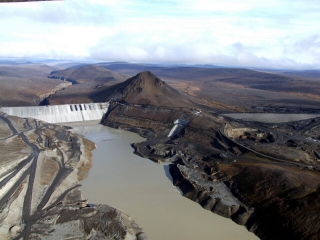
If they would have stood their ground and rejected all of , if the Fljótsdalshérað region would have rejected this, and the local politicians and the public — then this would never have become true. Now, some people state that we never had anything to say about it, but these are people who have a bad conscience because they did not fight against the construction.

Everywhere in the world, except Iceland, these “counterbalance steps” as they are called, would have been considered bribery. Basically, local politicians were bought up. Farmers and influential people were hired on good salaries and farmers got fertilizer to use on uncultivated land. All such indirect payments to influential people certainly have an impact on what decisions are made and on what premises they are made. Some farmers received compensation due to the destruction, but to pay compensation to only one generation is not acceptable. It would have made much more sense to link the compensation with the power plant’s electricity production and pay them to those living in the area on an annual basis.”

Gullfoss Falls Could be Forgotten

Asked about the actual value of the land now lost, Þórhallur answers: “This land used to be an attraction. The waterfalls that have now dried up, the vegetated land that went under water, the wilderness which is becoming increasingly precious. Being able to live with such quality is like nothing else. If well organized, hundreds of thousands of travellers could have been been shown this land without the land being harmed. Seen from a long-term perspective, that could have created more money than the dams.”
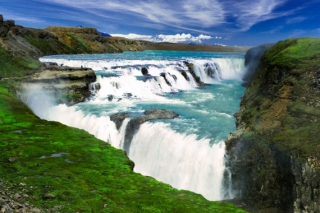
Think about the fact that the Gullfoss waterfalls and the hot spring Geysir did not use to be popular tourist places. It was not easy to get to them, say fifty or hundred years ago. We can not sacrifice something just because only a few people know about it. Using that same argument, we could as well dry up Gullfoss, as in a few decades we would forget about it and the next generations would not know what a beautiful waterfall used to flow there. We can not think in that way. One generation can not treat Iceland’s nature, this national treasure, in such a way.

I first drove to Hafrahvammar canyon in 1972 and, in fact, roads and paths have been there for many decades, but they were quite difficult to pass. That could easily have been changed and thus, the access to the area could have been increased.”
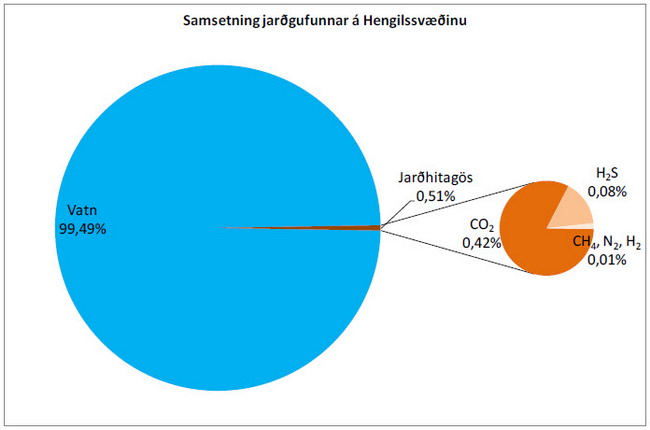
“The Same Horrific Situation Far and Wide”
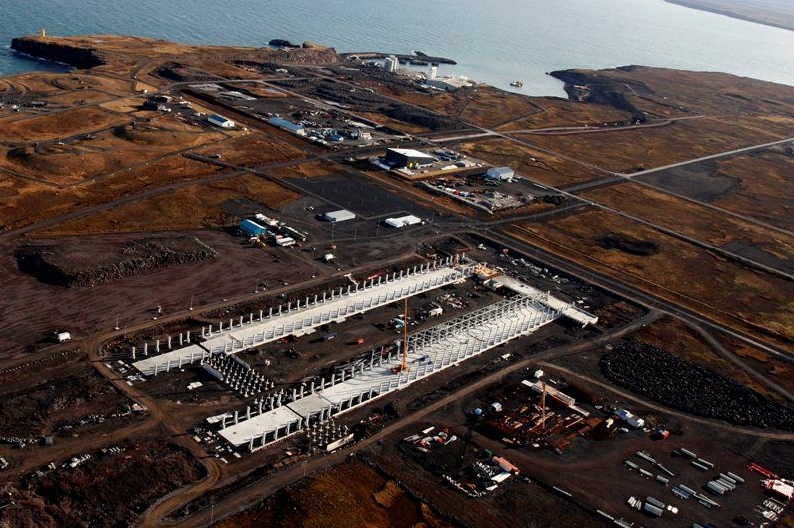
In the end he says that the aluminium smelter has not lived up to society’s expectations. “It still has not been possible to staff the smelter with Icelanders. Only Icelandic-speaking people are hired there but despite all the unemployment and all the advertising, sub-contractors partly staff their companies with foreigners, as Icelanders are not willing to take on these jobs. The labour turnover has been about 25 percent. Despite the fiasco the nation has went through [the 2008 economic collapse], this is not considered a decent option for a working place.

Was the hole purpose of drowning this land, destroying this nature, drying up these waterfalls, to be able to import migratory workers from abroad? Do some of the unemployed people on Suðurnes not want to come to the East, move into all the empty apartments and work in the smelter in Reyðarfjörður? Isn’t there something wrong? Why do people not apply for jobs here?” Þórhallur asks and adds that the pot-rooms and the cast-house are not really desirable workplaces, though some other jobs in the smelter might lure some. “One has to work 12 hours shifts and I know no-one who works in the smelter and looks at it as their future job. I also know people who used to work there but quit because of the long shifts. They did not want to sacrifice their family life for the job. People will work there until they find a better job. If the economy recovers in a few years time, how will this end? Will we end up having to staff the smelter solely with foreign labour on season?

This was supposed to save everything but the same horrific situation is evident far and wide. The smelter had, for instance, no positive impacts in nearby places like Stöðvarfjörður and Breiðdalsvík.

The planned population increase in Eastern Iceland never took place, and as the senselessness was absolute, everything collapsed. No-one lives in the houses that were built — streets were laid but no houses built on them. The municipality is bankrupted, as it is expensive to go into such a construction and to sit up with this half-finished street-system. This situation might recover in a few decades, but it still was not worth it.”